Buena Park Concrete Work That Leaves Your Home Tidy
We pour driveways, patios, stamped concrete, pool decks, slabs and walkways for homeowners in Buena Park, La Palma and Fullerton. Before forms go up we cover what needs covering. At the end of each day we wash off splatter and haul away debris, so your home stays livable while the work gets done.
What Moves the Price of a Concrete Job
Two driveways of the same size can price very differently. The cost comes from what has to happen before and after the pour, not just the yards of concrete. Here is what we look at when we build your estimate.
We measure on site and give you a written estimate broken out by line item, so you can see exactly what each part of the job costs before you decide.
- Area and thickness
- Square footage sets the volume of concrete, and thickness multiplies it. A patio might be four inches, while a driveway or RV pad that carries heavy loads needs more depth and heavier reinforcement.
- Tear-out and haul-off
- Removing an old slab means breaking it, loading it and paying dump fees by weight. Thick or heavily reinforced concrete takes longer to break and costs more to haul.
- Access to the pour
- When the truck can reach the forms, concrete flows straight down the chute. Pours tucked behind the house or down a tight path beside the garage often call for a pump line or a crew running wheelbarrows, and that adds equipment and labor.
- Surface texture and pigment
- Plain broomed concrete takes the least time to finish. Pressing a stamp pattern means buying release agent, mixing pigment into the load and applying sealer afterward. It also takes extra hands on the slab, because the mats have to go down before the surface stiffens.
- Soil and grade
- Soft spots, roots and poor drainage have to be corrected before base goes down. Sloped lots may need more excavation or a short retaining edge to hold the grade.
- Permits
- Work that touches the public sidewalk or a driveway approach usually needs a city permit and inspection. We include those steps in the estimate when your job calls for them.
New Concrete for Every Part of Your Yard
Our work is new flatwork and structures, poured from the base up. That covers driveways and RV parking pads, patios and courtyards, pool decks and full concrete backyards, plus side yards, garage floors, slabs, steps and stairs, and walkways and sidewalks. Stamped concrete can go on most of these surfaces when you want the look of stone or brick without the loose joints. Each service page explains the base, thickness and finish that suit that job.
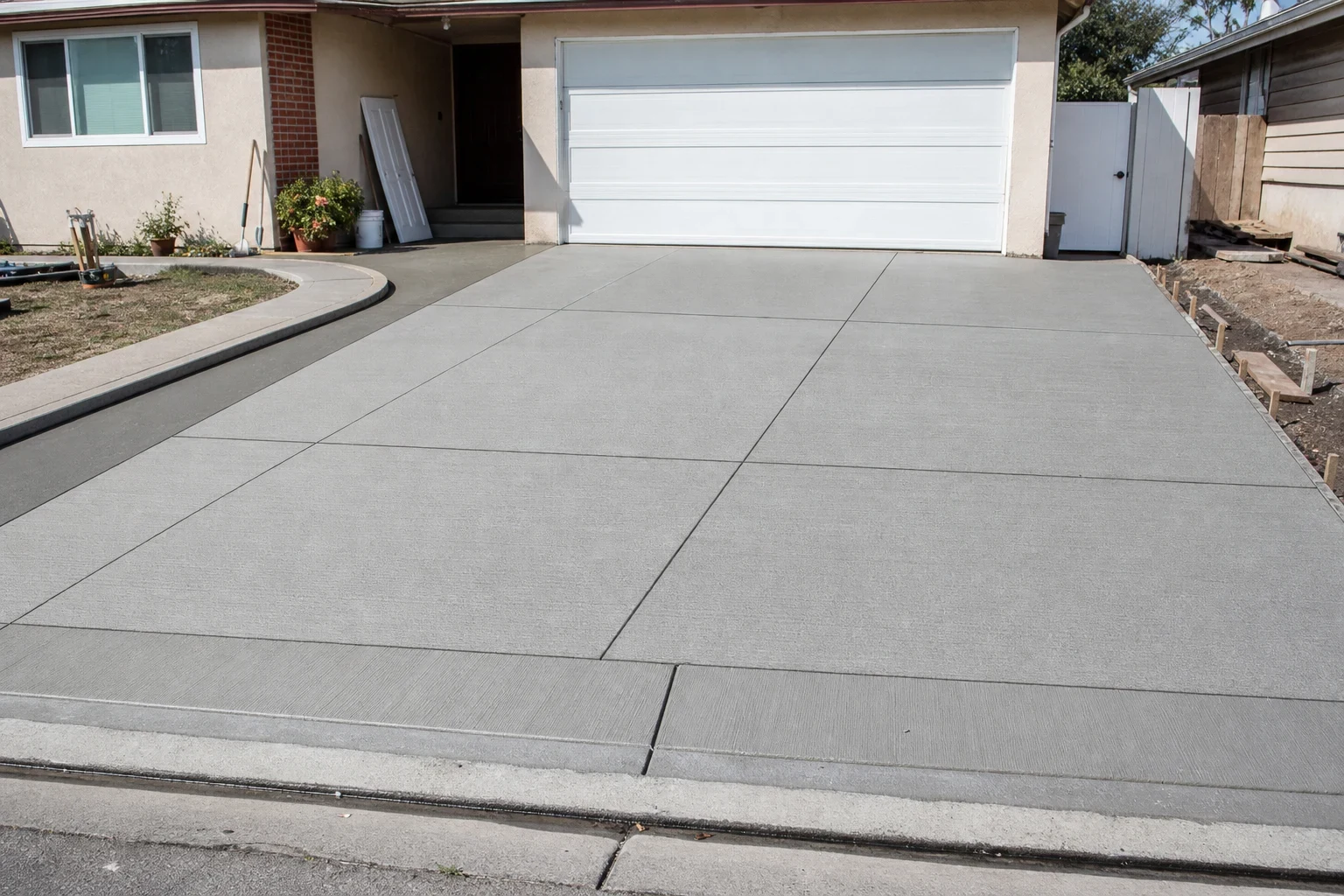
Driveways
Tear-out and new concrete driveways built on a compacted base with rebar, cut joints and correct drainage, with your yard protected and the street swept daily.
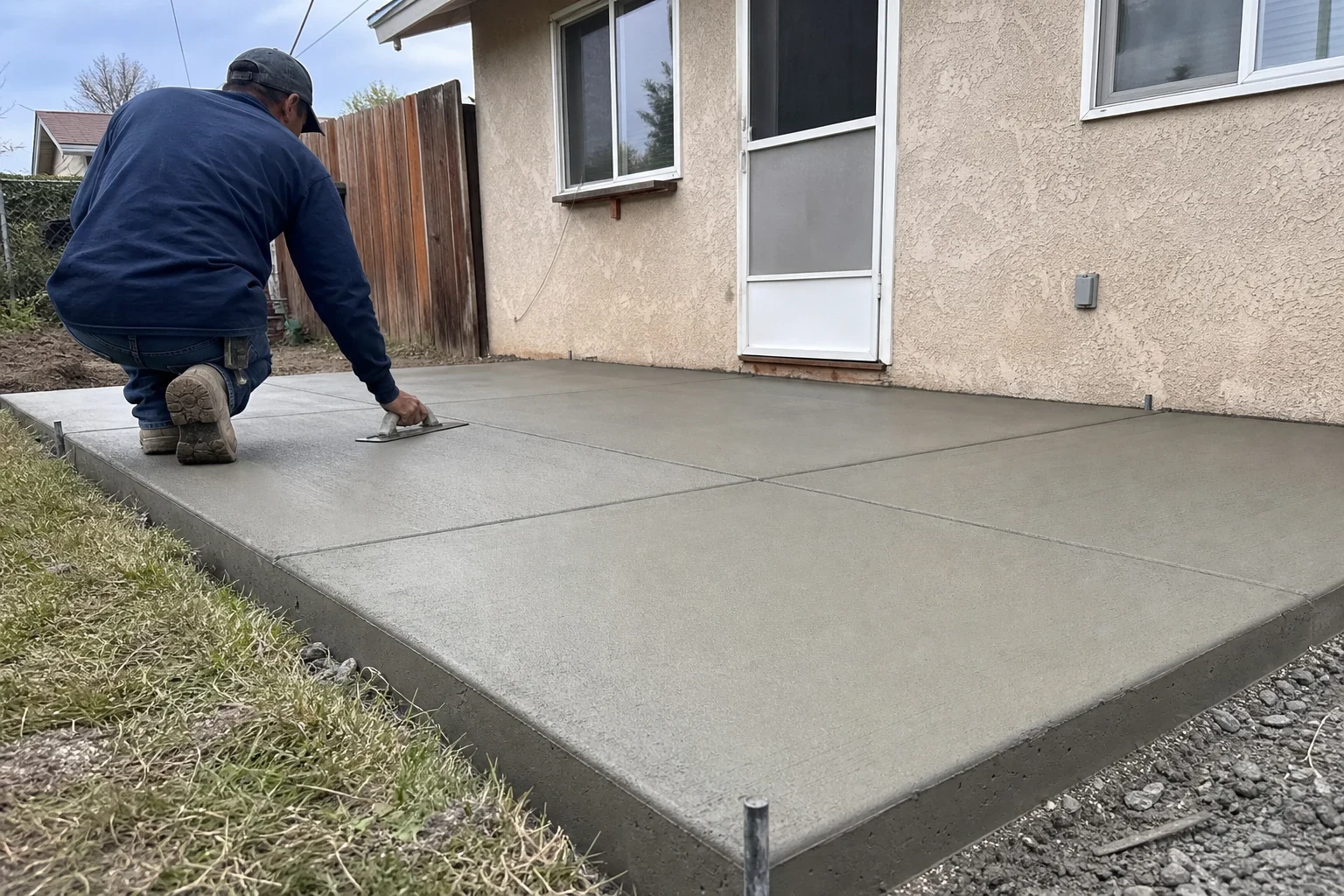
Patios
New concrete patios set on a compacted base with rebar and planned joints, poured while your yard is protected and cleaned up every day.
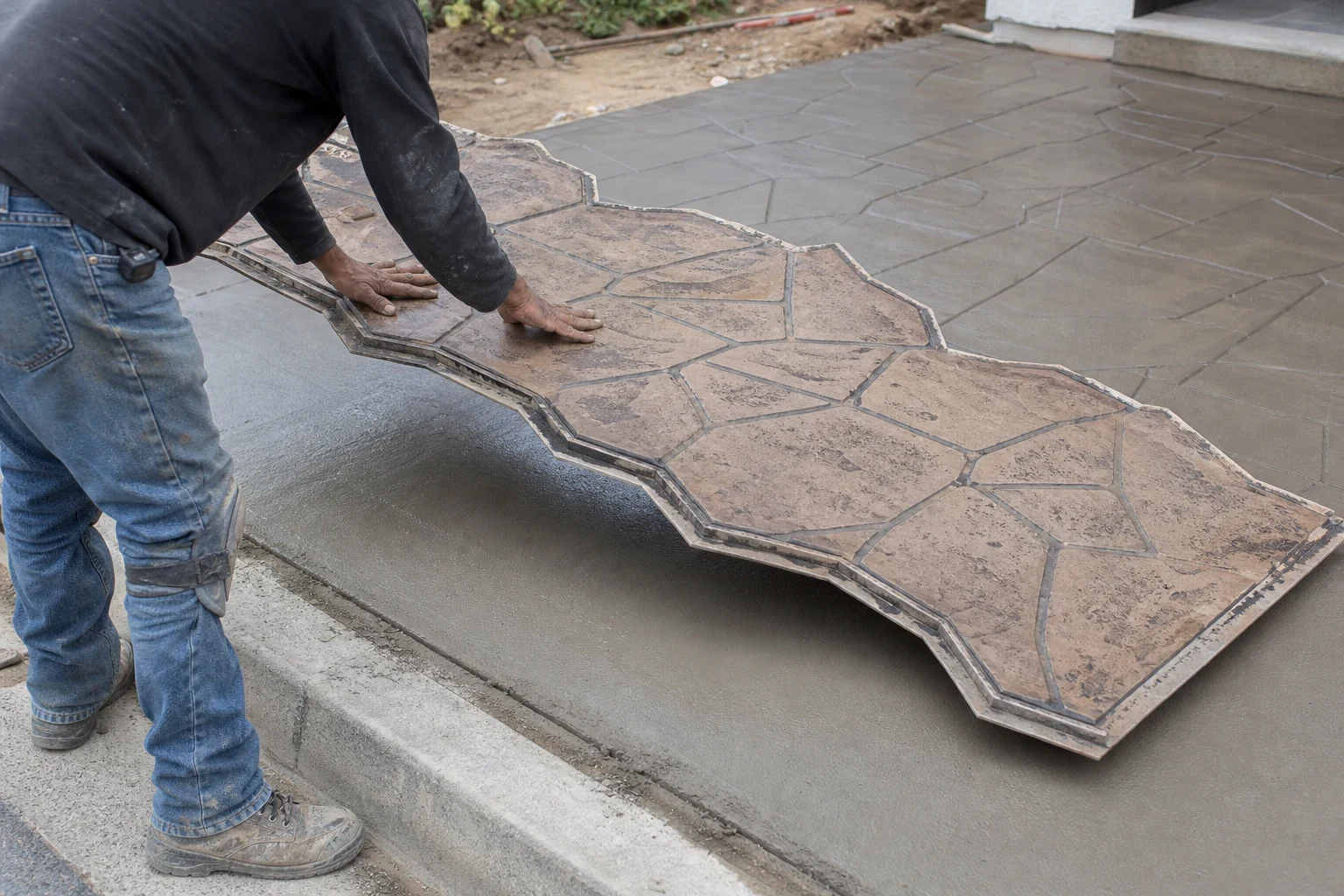
Stamped Concrete
New stamped slabs with integral color, real texture mats and a UV-stable sealer, poured with release powder kept off your walls and planters.
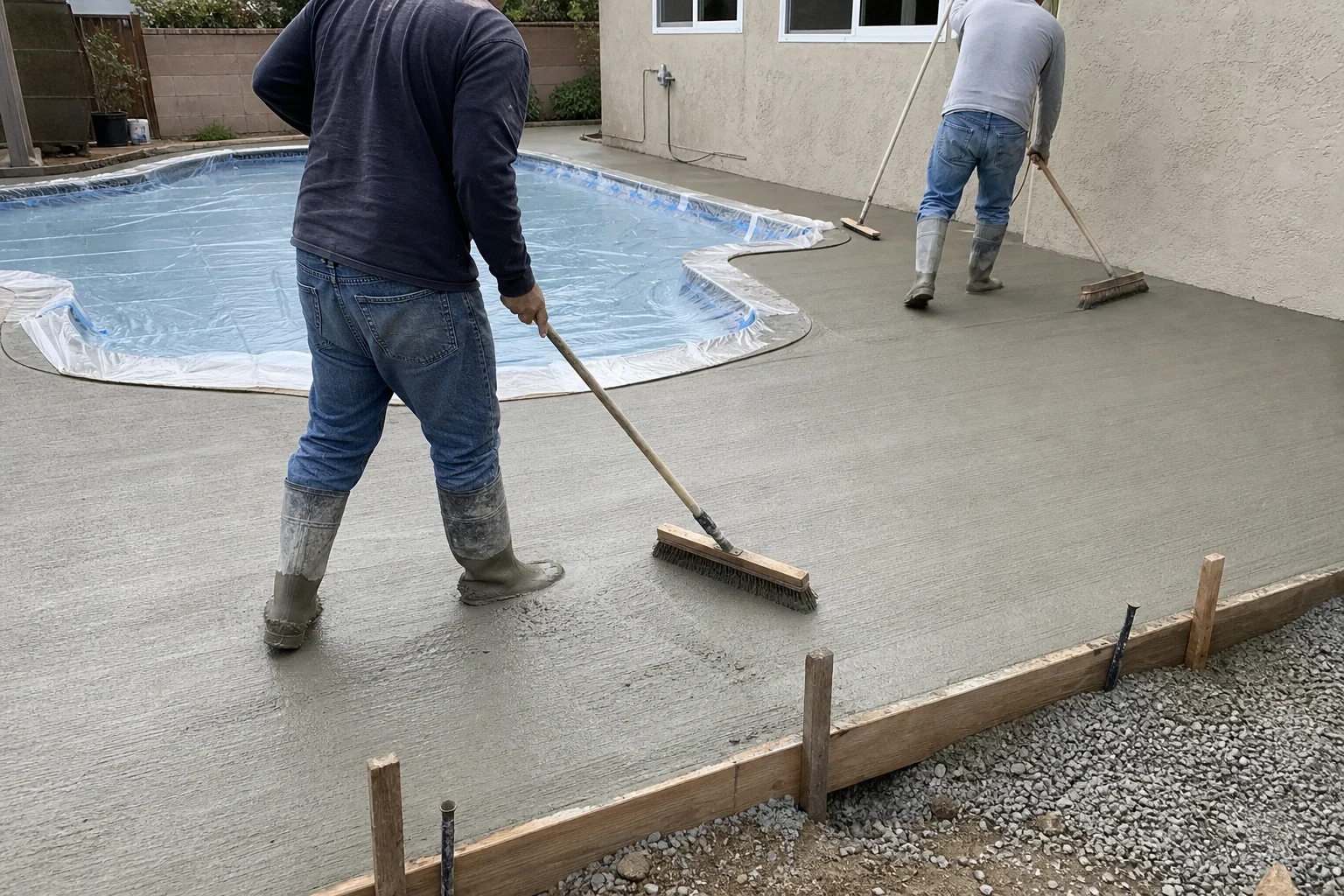
Concrete Pool Decks
New pool deck concrete with grippy, cooler finishes, a proper slope away from the water and a pool that stays clean while we pour.
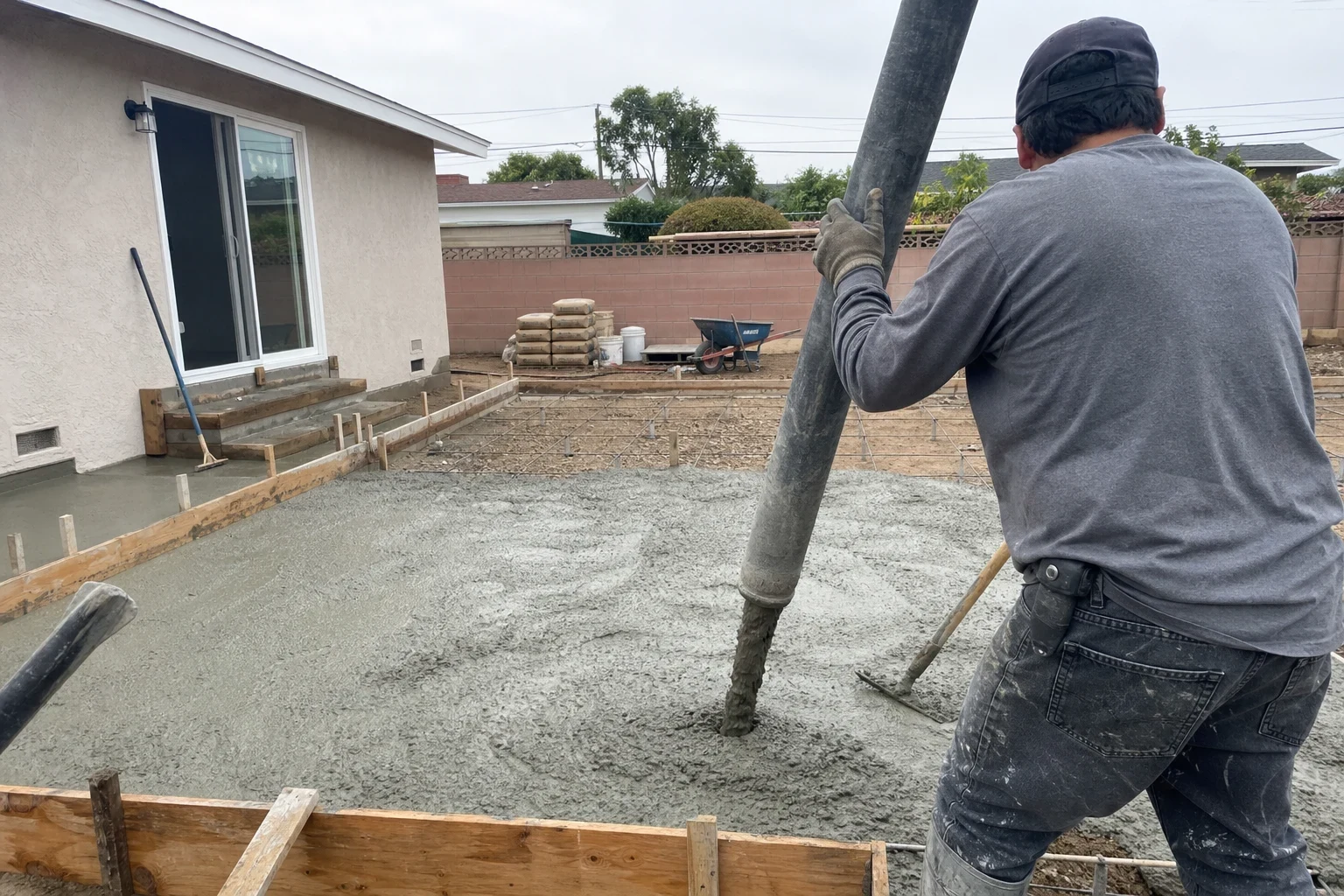
Concrete Backyards
Replace lawn, dirt and tired pavers with one planned concrete surface that drains correctly and is built around how you use your yard.
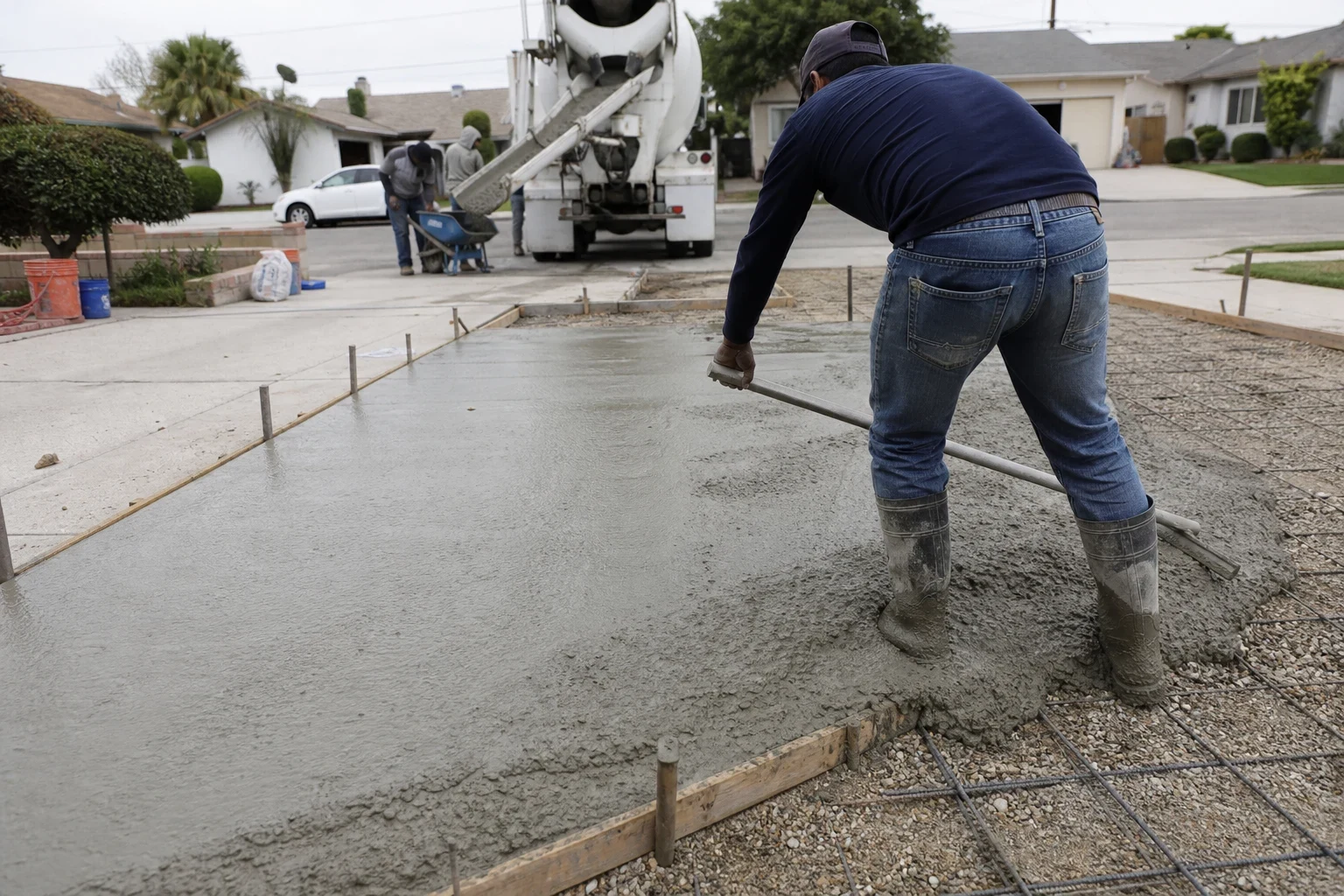
Concrete Slabs
Reinforced slabs for sheds, hot tubs, equipment pads and patio covers, with graded base, planned joints and a yard left swept each day.
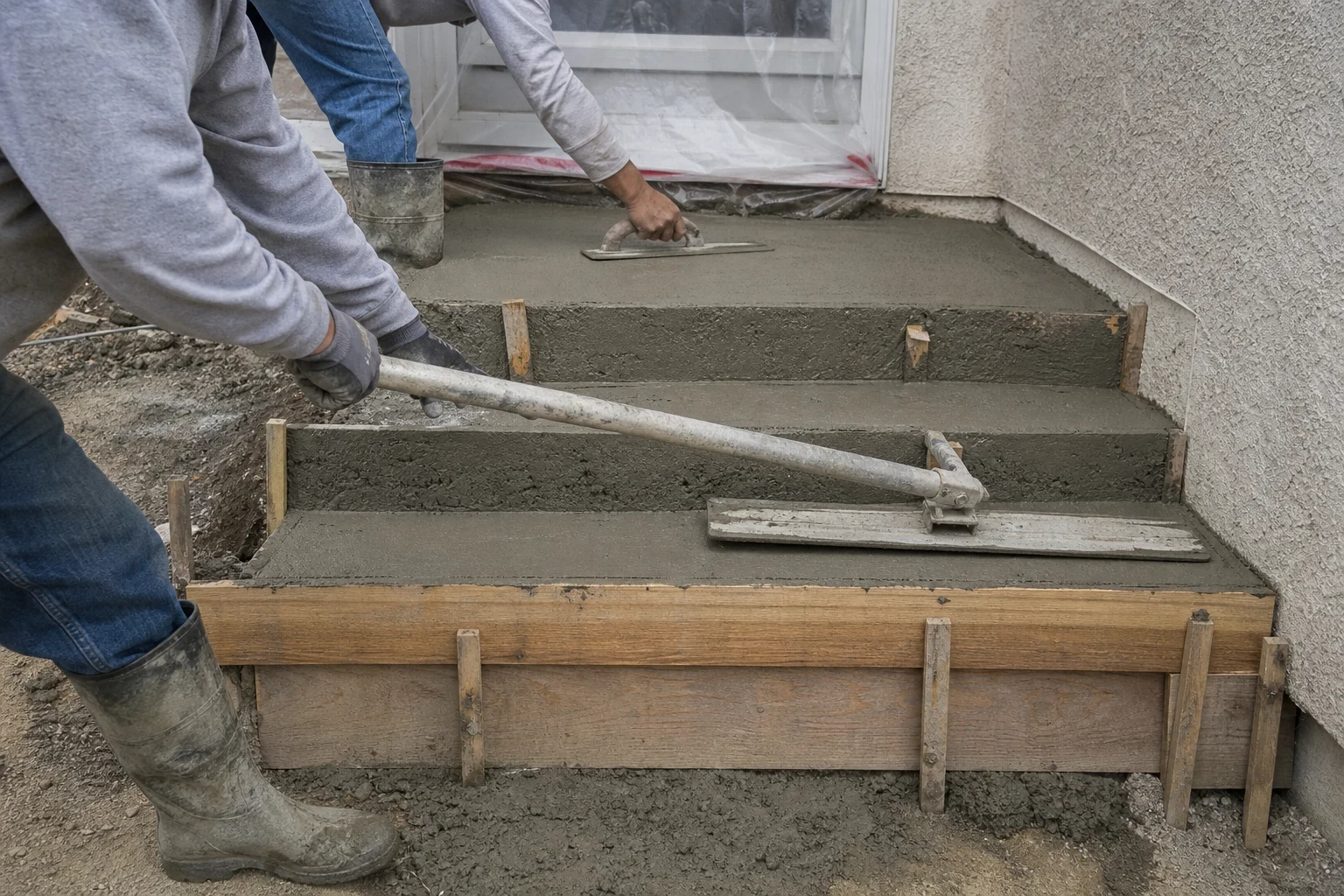
Steps and Stairs
Front stoops, back-door steps and garden stairs, formed for even risers and deep treads, with rebar tied in and a slip-resistant finish.
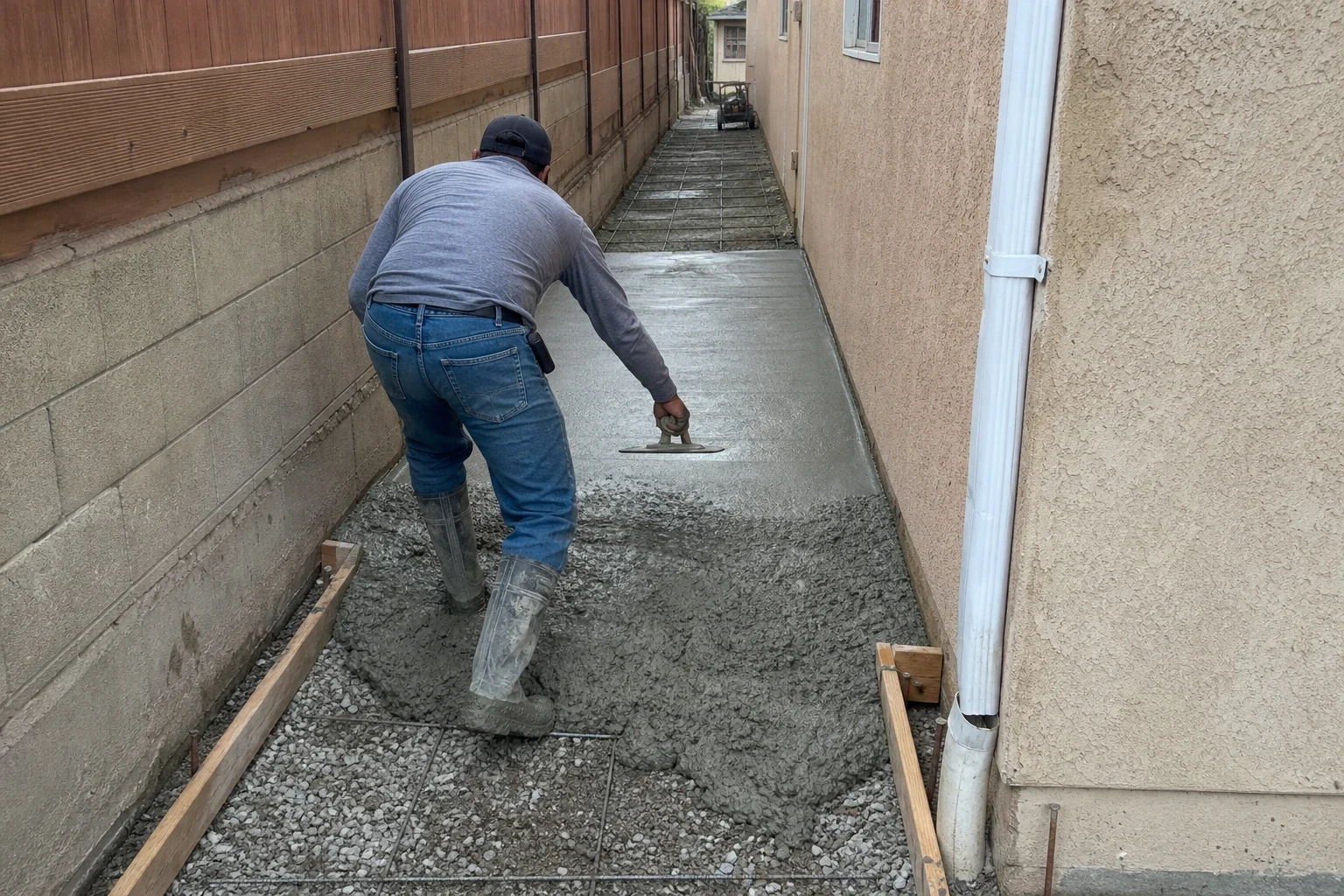
Concrete Side Yards
Turn the narrow strip beside your house into a sloped, drained concrete path for trash cans, equipment access and everyday foot traffic.
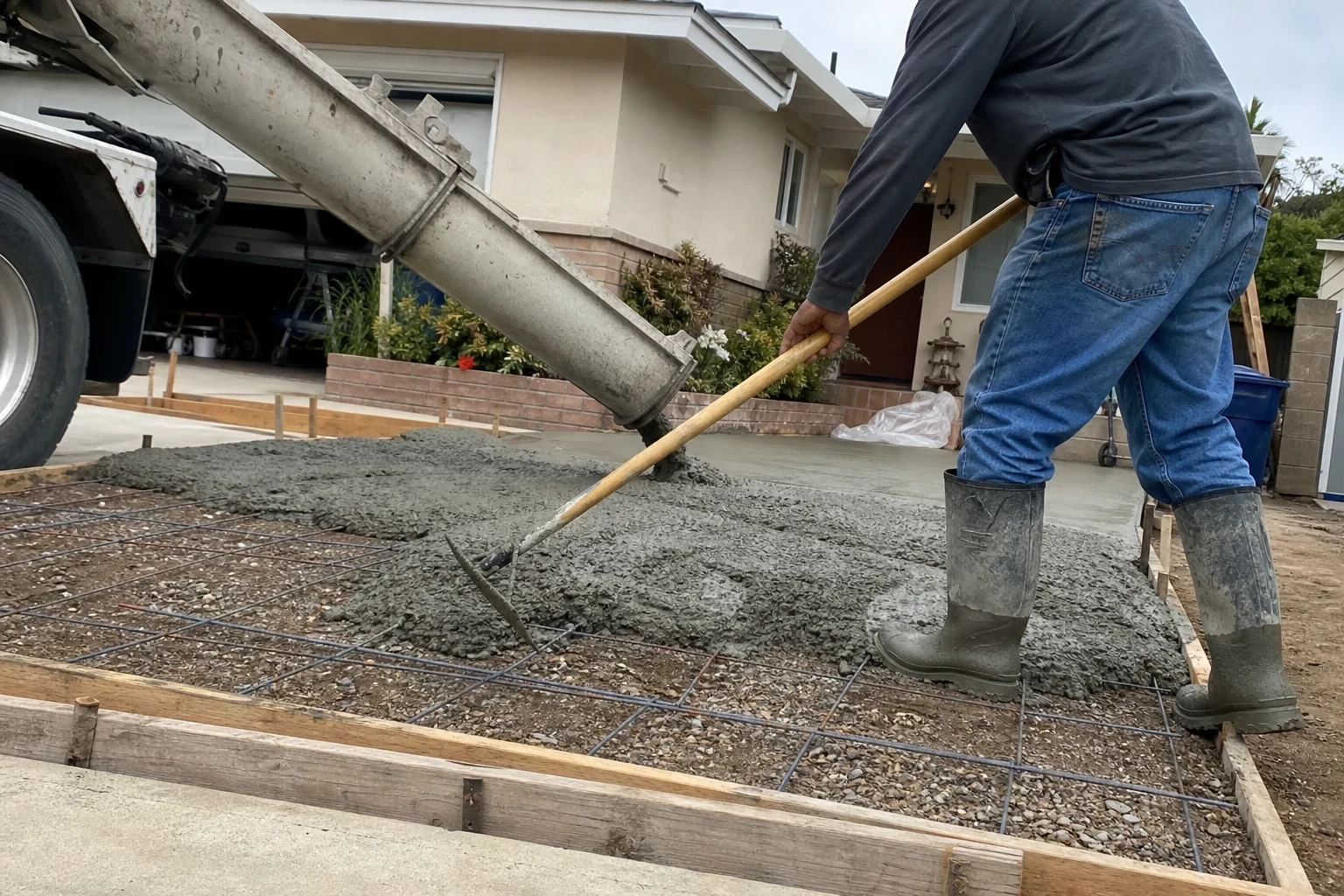
RV Parking Pads
Reinforced concrete pads sized for your motorhome, trailer or boat, poured on a compacted base and sloped so water runs off.
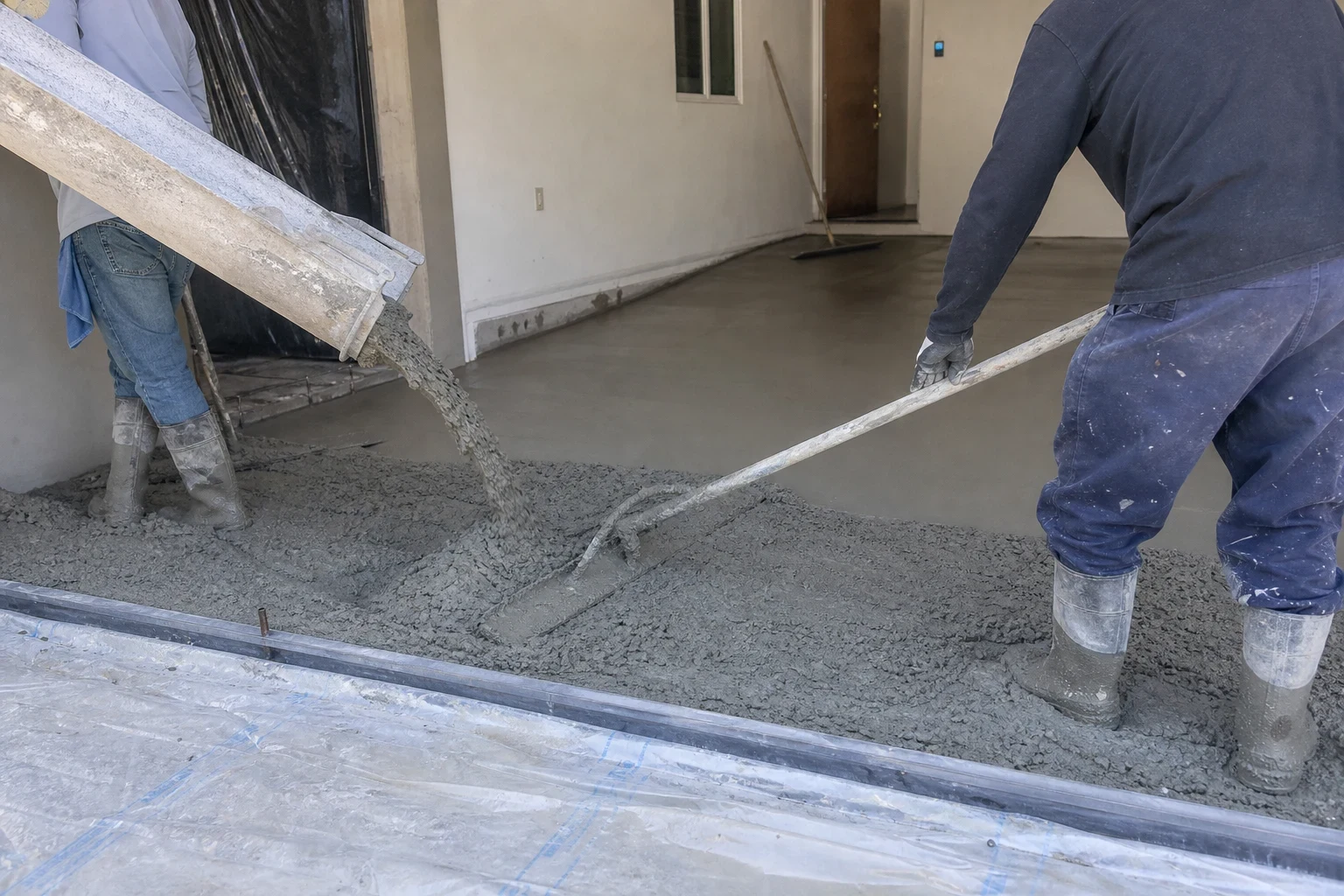
Garage Floors
We remove a worn garage slab and pour a new one with proper base, rebar and slope, while protecting your garage walls and keeping the work area clean.
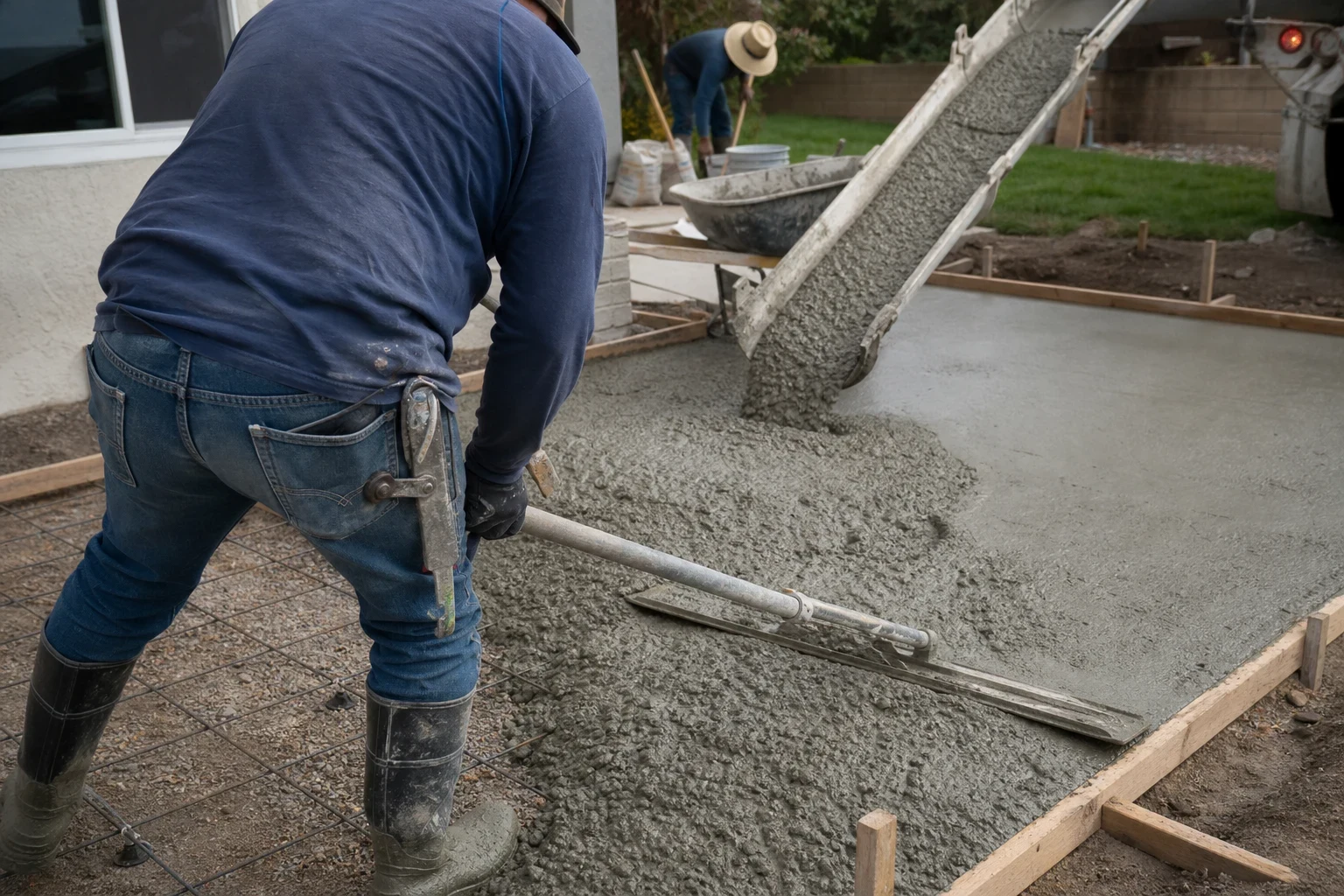
Concrete Courtyards
New courtyard concrete sloped to drains, set below your stucco weep screed, and poured with your walls and doors covered from start to finish.
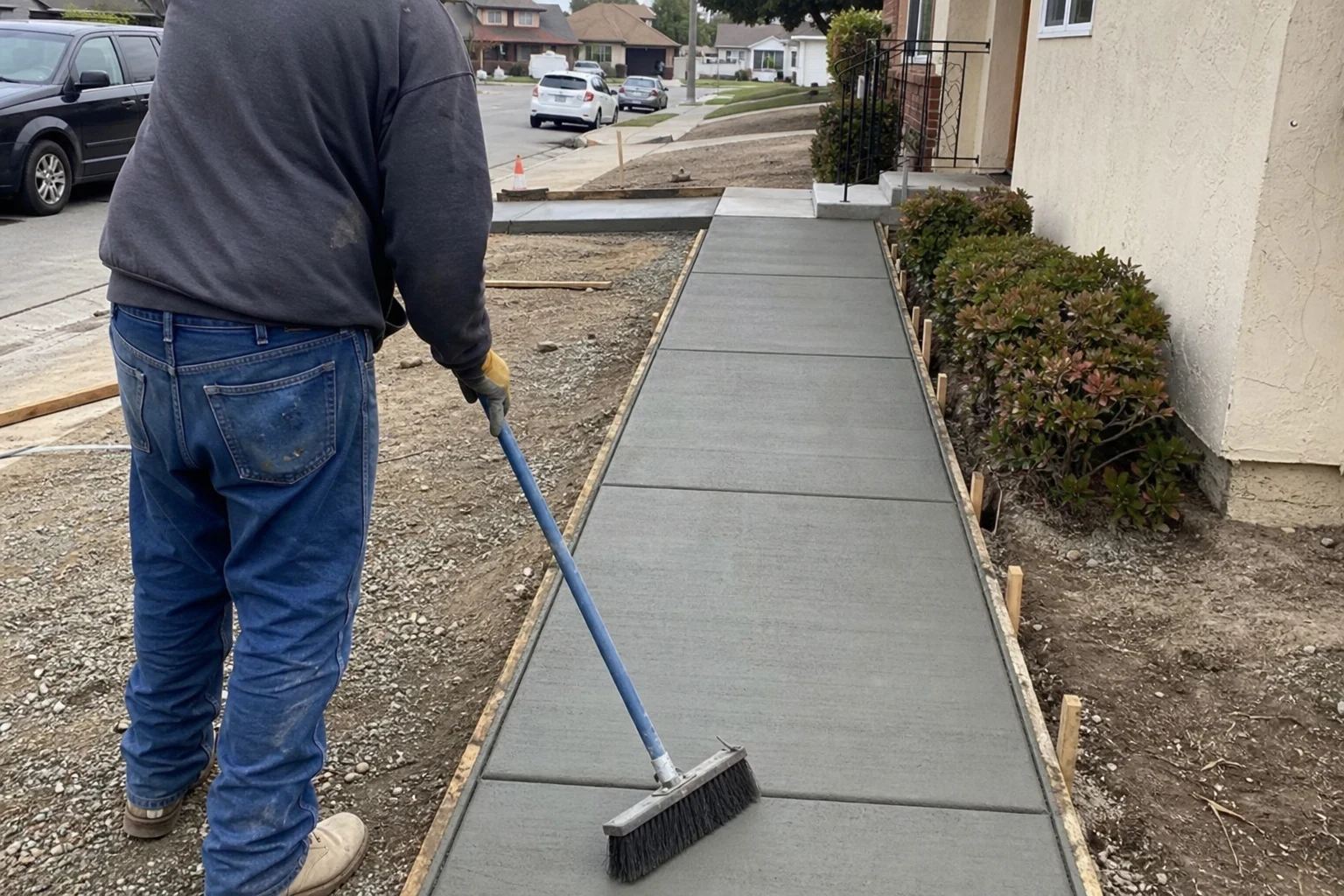
Walkways and Sidewalks
New concrete walks from the street to your door or around the side of the house, built on compacted base with proper joints and slope.
How We Keep the Work Clean and the Concrete Sound
Concrete is messy by nature. Wet mix, cement dust and washout water all stain what they touch, so we plan the cleanup as carefully as the pour.
- 01
Protection goes down before the first cut
We lay plywood over lawns and finished walkways along the delivery path and tape plastic over stucco, door thresholds and AC units near the pour. Cement paste etches glass and stains stucco in minutes, so blocking it beats scrubbing it later.
- 02
Washout stays in a container
Truck chutes, wheelbarrows and tools get rinsed into a lined washout container, never onto your lawn, into a planter or down the gutter. High-pH washout kills grass and is not allowed in storm drains.
- 03
A cleaned site every evening
Before we leave each day we sweep, stack forms neatly and haul broken concrete and spoils off the property. You can walk your yard at night without stepping around rubble.
- 04
Base and steel done right
Clay soil swells when wet and shrinks when dry, which is what lifts and cracks thin slabs. We compact a layer of crushed aggregate base, then prop the rebar or wire up on chairs. Steel lying on the dirt does little; held at mid-depth, it keeps any cracks pinched closed.
- 05
Joints placed where cracks want to go
All concrete shrinks as it cures. We cut or tool control joints at spacing matched to slab thickness so any shrinkage cracking happens in a straight line inside the joint, not across the middle of your patio.
Concrete Work Across Buena Park and Nearby Cities
We build driveways, patios and other flatwork throughout Buena Park. We also work in La Palma, Fullerton, Cypress, Cerritos and Stanton, and north into Norwalk, La Mirada, La Habra, South Whittier and Artesia.
- Buena Park
- La Palma
- Fullerton
- Norwalk
- La Habra
- South Whittier
- Cypress
- Cerritos
- La Mirada
- Stanton
- Artesia
If you are close to these cities and not sure we reach you, mention your street when you call and we will tell you right away.
A Concrete Crew That Treats Your Yard Like a Finished Room
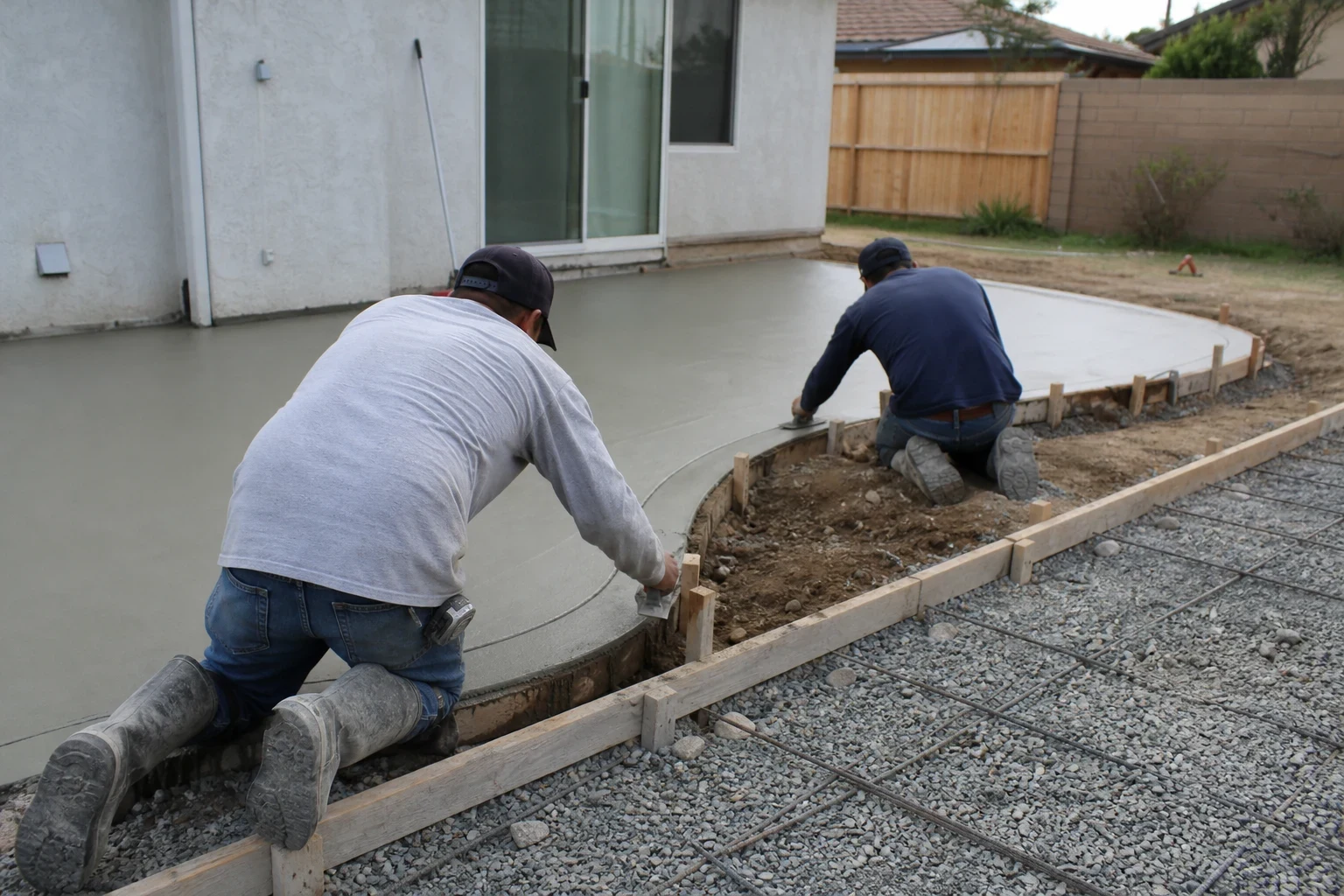
We are a concrete contractor working on homes around Buena Park. Most of the houses here are mid-century and later tract homes with stucco walls, mature landscaping and tight side yards, which means the pour is usually inches from something you care about. That shapes how we work.
We think a good concrete job has two parts. The first is structural: a compacted base, steel in the right place, proper slope for drainage and joints that control cracking. The second is how your home looks while we are there and after we leave. We give both the same attention, and we explain what we are doing and why as the job moves along.
- License
- Licensed by the California State License Board (CSLB)
- In business
- In business 15+ years
- Warranty
- 1-year warranty
How a Concrete Job Runs From Call to Cure
Most residential pours follow the same sequence. Knowing it ahead of time helps you plan around the days the crew is in your yard.
- 1
Phone call and site visit
You tell us what you want built. We come out, measure, check access, look at drainage and soil, and talk through finish options.
- 2
Written estimate
You get a line-item estimate covering demolition, base, reinforcement, concrete, finish and any permit work, along with an expected schedule.
- 3
Protection, demo and prep
We cover the delivery path and nearby surfaces, remove old concrete, grade, compact the base and set forms and steel. If a permit inspection is required before the pour, it happens here.
- 4
Pour and finish
Concrete is placed, screeded and floated, then broomed or stamped. Control joints are tooled or saw-cut once the surface can take it, and all washout goes into the container.
- 5
Cure and final cleanup
Forms come off, the edges get backfilled and the protection is pulled up. We wash down the area and leave your yard clear, with written guidance on when you can walk, drive and seal.
Common Questions About New Concrete
Something not covered here? (714) 640-6994
How long before I can walk or drive on new concrete?
Most slabs can take people walking on them within 24 to 48 hours. Give a new driveway about a week before you park a car on it. Concrete continues to harden for close to a month, so keep heavy trucks, RVs and dumpsters off until that point.
How do you protect my house and landscaping during the job?
We put plywood over the lawn and walkways the crew and wheelbarrows will cross, and tape plastic over stucco, windows and equipment near the pour. Washout goes into a lined container. At the end of each day we sweep up and haul away debris.
Will my new concrete crack?
All concrete shrinks as it cures, and some hairline cracking is normal. Our job is to control where it happens. A compacted base, properly placed reinforcement and control joints at the right spacing keep cracks in the joints and keep slab sections from shifting.
Do you offer a warranty?
Yes. Our finished work comes with a 1-year warranty. We go over what that coverage includes before the job starts, so you know where you stand from day one.
Can you remove my old driveway or patio first?
Yes. Tear-out and haul-off are part of most of our jobs. We break the old slab, load it out and dispose of it, then grade and compact new base before forming. The cost of removal is listed as its own line on your estimate.
Do I need a permit for a new driveway?
Work on your own property often does not need one, but replacing a driveway approach or any section of public sidewalk usually requires a city permit and inspection. We tell you during the site visit whether your project needs one and include it in the plan.
Is stamped concrete slippery around a pool?
Smooth sealed stamped concrete can get slick when wet. For pool decks we use textured stamp patterns and can add a fine anti-slip additive to the sealer, which gives bare feet better grip without changing the look much.
Ready to Plan Your New Concrete?
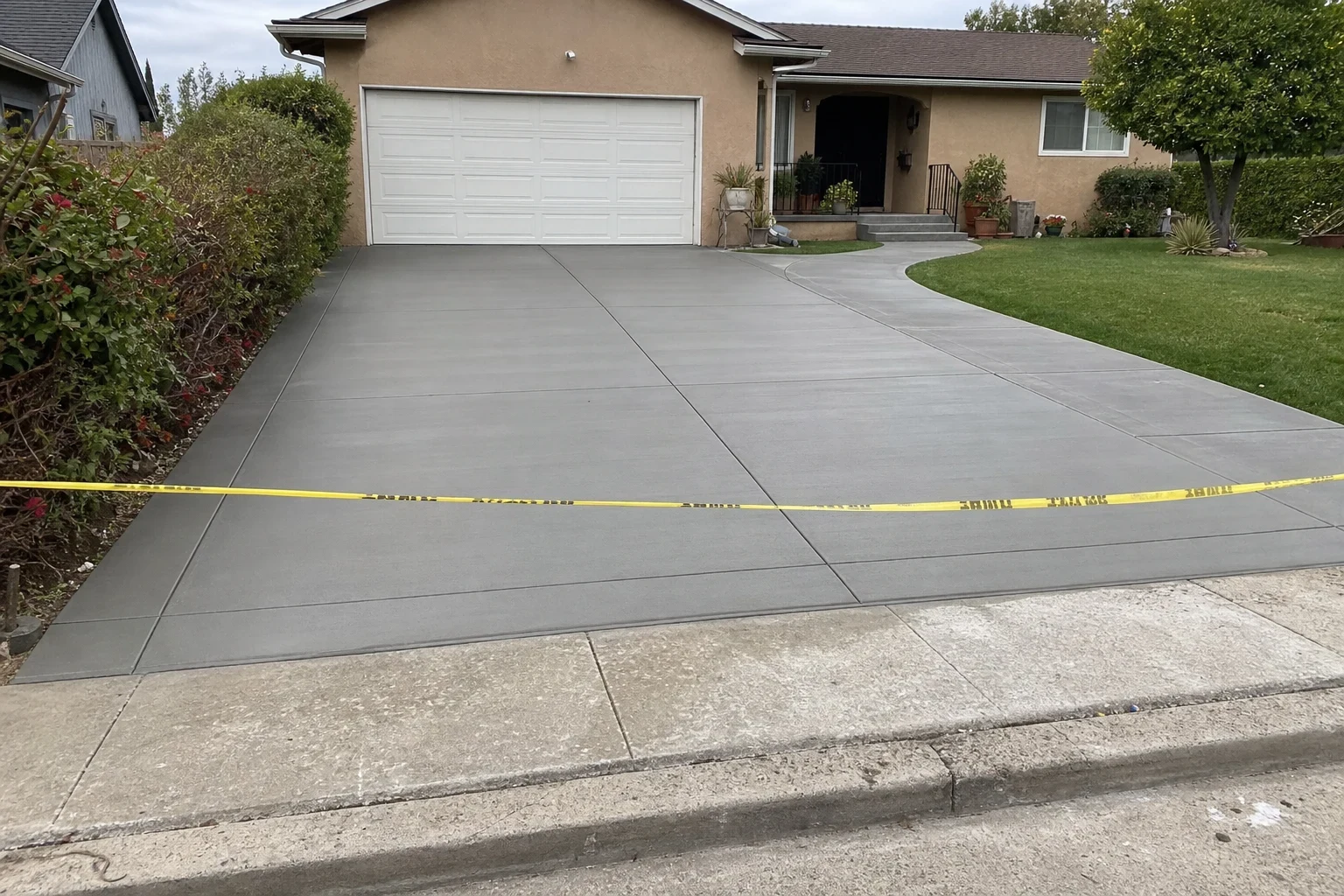
Tell us what you want to build and where. We will set up a visit, measure the space and give you a written estimate with every step of the job laid out.