ServicesConcrete Backyards
Concrete Backyards in Buena Park
We turn patchy lawn, bare dirt and old slabs into one usable concrete backyard. We grade it to shed water away from your home, reinforce it, cut the joints where cracks want to form, and clean the work area before we leave each day.
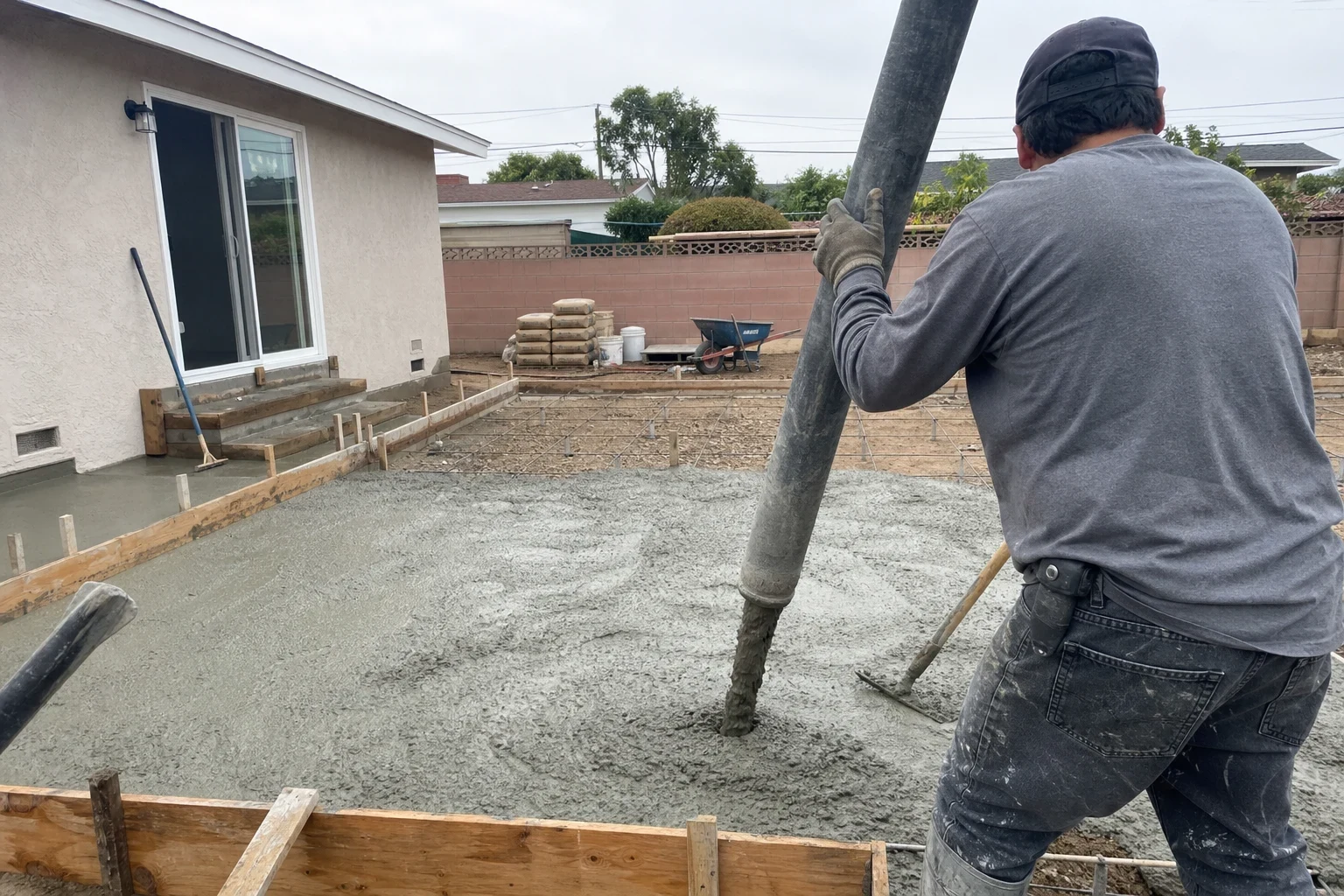
One Surface, Planned From the Soil Up
A concrete backyard covers most or all of the yard behind your home, not just a small patio pad. Because it is a big area, the details that hide under the surface decide how it holds up: how the soil is compacted, how much aggregate base goes down, where the slab slopes, and where the control joints fall. Get those right and the slab stays flat and drains. Get them wrong and you see standing water, heaved sections and random cracks within a few seasons.
We plan the layout around how you use the space. That means leaving cutouts for trees and planters, setting the fall so rainwater reaches an area drain or the side yard instead of your foundation, and matching the finish to the use. A broom finish gives grip around a barbecue or play area; stamped concrete or a different finish can dress up the seating zone.
We have been in business 15+ years and are licensed by the California State License Board (CSLB). Most of our backyard work is done through a narrow side gate, so protecting the rest of your property is part of the plan from the first day.
What a Backyard Pour Includes
- Protection before demolition
- We lay plywood or mats along the access path, cover nearby windows, AC units and hose bibs, and tape off the back door. Concrete splatter and saw dust are far easier to prevent than to scrub off stucco.
- Tear-out and haul-away
- Lawn, roots, old pavers and existing slabs are broken out and hauled off. Nothing is left piled in the side yard or the driveway overnight.
- Grading and compacted base
- We cut to grade, compact the native soil, then place and compact a layer of crushed aggregate base. The clay-heavy soil common around here swells when wet and shrinks when dry, and a proper base reduces how much of that movement reaches the slab.
- Forms, slope and drainage
- Forms are set to a consistent fall away from your home. Where the yard is enclosed by block walls, we plan area drains or a channel drain so water has somewhere to go.
- Reinforcement and joints
- Rebar or wire mesh is set on supports so it sits inside the slab, not on the dirt. Control joints are tooled or saw-cut on a planned grid so shrinkage cracks follow the joint lines.
- Finish and daily cleanup
- We finish the surface, apply curing compound, and rinse tools and wheelbarrows in a contained spot rather than your lawn or gutter. Each day ends with the work area swept and the access path clear.
Signs Your Yard Is Ready for Concrete
Water pools after rain
Puddles that sit near the house or along a block wall mean the yard has no real fall. A graded slab moves that water to a drain instead of toward your foundation.
Lawn that never fills in
Shade from trees and walls, plus summer watering limits, leave many yards with thin grass and bare patches. Concrete removes the watering and the mud.
Dirt tracked into your home
If kids and pets carry the yard inside every day, a hard surface outside the back door fixes the source.
An old slab that has heaved or split
When an existing patio has lifted at the joints or broken into sections, it usually means the base underneath failed. Pouring new on a fresh compacted base is the lasting answer.
No flat place for furniture
Tables that rock and chairs that sink into the grass are a sign the yard needs a level, usable surface.
What Sets the Price of a Concrete Backyard
Square footage drives most of the cost, but backyards vary more than most concrete work because of access and what has to come out first. Your written estimate breaks out each part so you can see where the money goes. We do not add charges after the pour that were not on that estimate.
Size and layout
Larger areas cost more in total. Curves, planter cutouts and steps in the slab add forming time.
Access to the yard
A wide side gate lets us use wheelbarrows. A narrow or blocked path may mean a concrete pump, which changes the cost of pour day.
What comes out first
Removing an old slab, thick roots or several inches of soil takes more labor and more haul-away than clearing a lawn.
Drainage work
Area drains, channel drains and the piping to carry water to the street or side yard add material and trenching.
Finish choice
A broom finish is the most economical. Stamped concrete, color or other decorative finishes cost more per square foot.
How the Job Runs
- 1
Walk-through and measurements
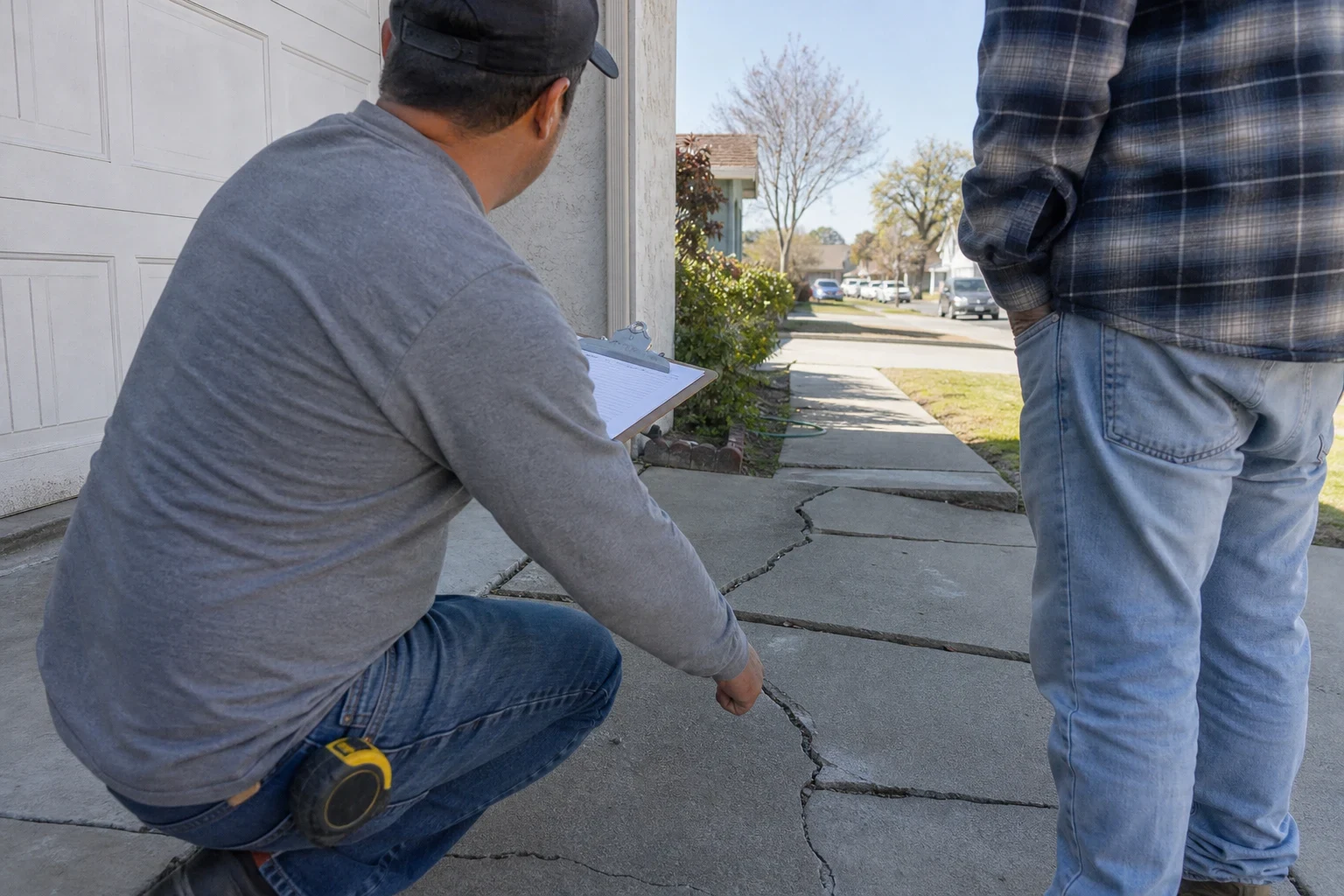
We measure the yard, check the side gate width, look at where water drains now, and note trees, utilities and sprinkler lines. The price comes to you in writing, broken out by tear-out, base, concrete, drainage and finish, and we check with the city on whether your plan needs a permit.
- 2
Protection and tear-out
Day one starts with covering the access path and the back of your home. Then we remove lawn, old concrete and roots, and haul the debris away the same day.
- 3
Grade, base and forms
We grade, compact, place the aggregate base and set forms and reinforcement. Before the pour, we walk the layout with you so cutouts and drain locations are exactly where you want them.
- 4
Pour and finish
Concrete arrives by truck and is moved in by pump line or wheelbarrow, depending on access. We place, screed, float and finish it, cut the joints and apply curing compound.
- 5
Curing and final cleanup
We pull forms once the concrete has set, backfill the edges, rinse the area and remove the protection. Then we walk the finished yard with you.
Concrete Backyard Questions
How soon can we use the backyard after the pour?
Walking on the new slab is usually fine after a day or two. Give it roughly seven days before you roll out the barbecue or bring back the heavy patio set. Concrete keeps gaining strength for weeks, so lift heavy items rather than dragging them across the surface early on.
Will the concrete crack?
Concrete shrinks as it cures, so some hairline cracking is normal. Control joints placed on a planned grid give those cracks a straight path to follow, and the compacted base and reinforcement limit wider cracking from soil movement.
How do you keep water away from my house?
We set the forms so the slab slopes away from the foundation, typically toward an area drain, the side yard or the street. If the yard is boxed in by walls, we add drains during the walk-through planning so water does not get trapped.
What happens to my side yard and landscaping during the job?
We cover the access path with plywood or mats and protect plants and fixtures along it. Debris goes straight to the truck, and the path is swept clean at the end of each day.
Do you warranty backyard concrete?
Yes. Every backyard slab we pour is backed by a 1-year warranty. Ask about the coverage during the estimate visit and we will explain it plainly before any work is scheduled.
Can we leave spaces for trees and planters?
Yes. We form cutouts around existing trees and for new planter beds, and we keep slab edges back from tree trunks so roots have room.
Plan Your Concrete Backyard
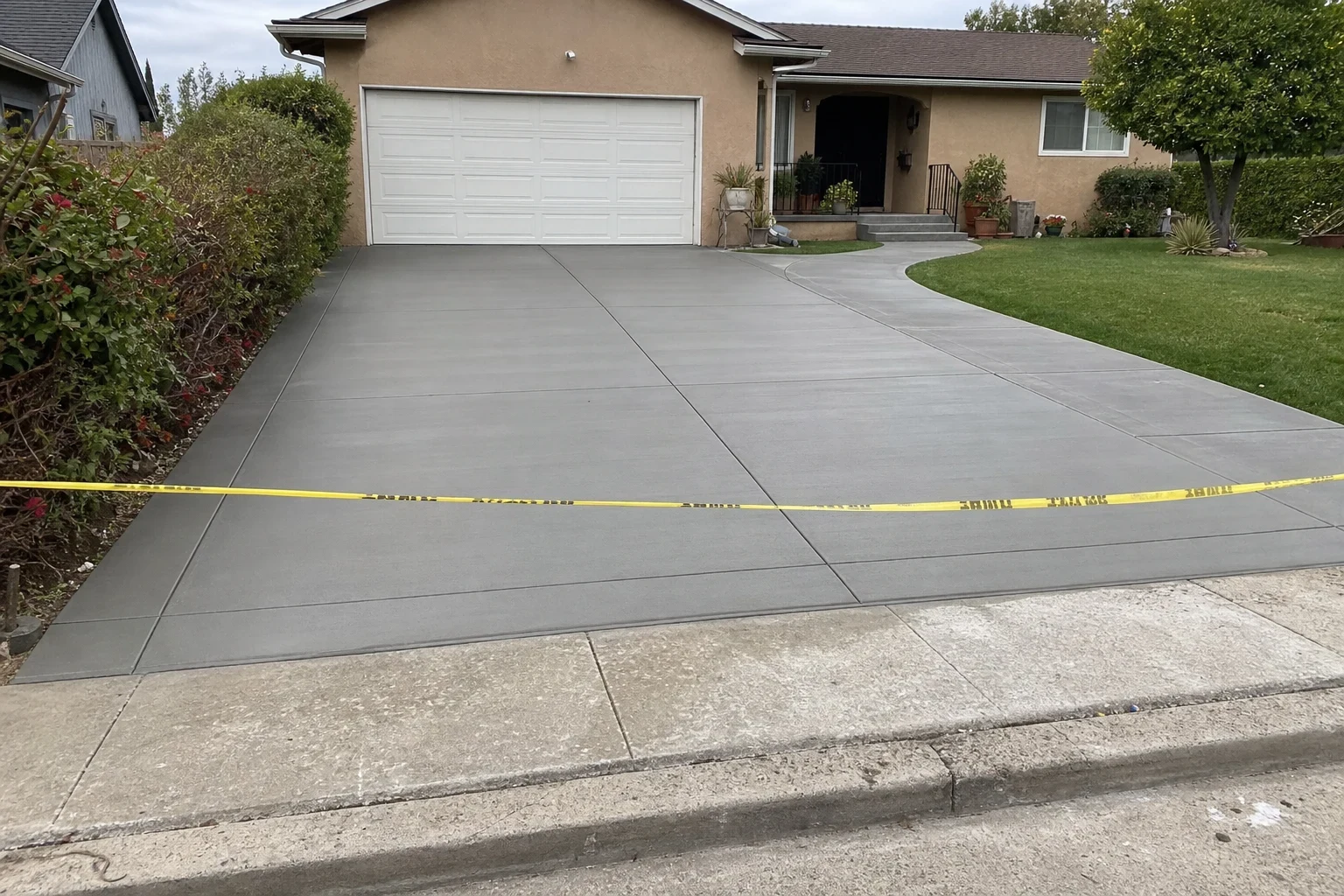
Tell us about your yard, the side gate and what you want to use the space for. We will set up a walk-through and go over the layout, drainage and finish with you.