ServicesPatios
Concrete Patios in Buena Park
We build concrete patios that sit flat, shed water away from your home and keep their shape for years. The base, slope and steel get as much attention as the finish. Your stucco, windows and lawn stay covered, and the site is swept before we leave each day.
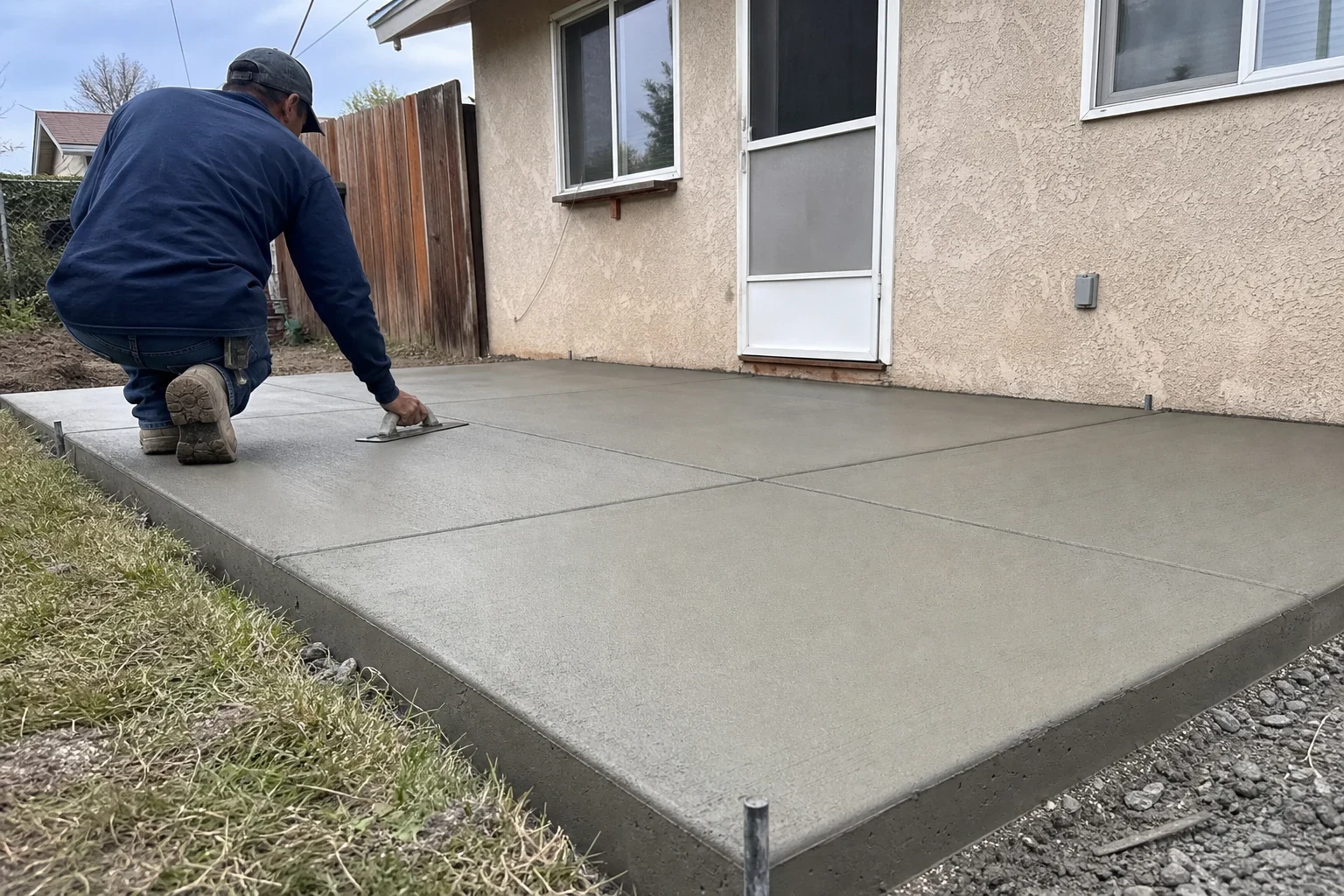
A patio that drains right and leaves your yard clean
A concrete patio is a slab poured at grade beside or behind your home, usually 4 inches thick over a compacted rock base. It is the right call when you want a flat, low-upkeep surface for a table, a grill or a future cover. Pavers and wood decking mean joints to weed and boards to reseal.
We have been in business 15+ years and are licensed by the California State License Board (CSLB). Most of what decides whether a patio lasts happens before the truck shows up: soil prep, slope away from the foundation, reinforcement and where the joints go. Your estimate lists each of those steps so you can see what you are paying for.
We treat the rest of your property as part of the job. Plastic goes over stucco and windows near the pour. Plywood goes down wherever wheelbarrows cross the lawn. Each evening the site is raked and swept, and tools are stacked out of the way.
What goes into every patio we pour
- Tear-out and haul-off
- Old concrete, brick or turf gets broken out and loaded onto the truck as we go. Nothing is left piled in your side yard waiting for a pickup.
- Excavation and compacted base
- We dig to the planned depth, compact the native soil, then place crushed aggregate base and compact it in layers. The clay soils common around here expand after rain and pull back as they dry out. A solid rock base evens out that movement so the slab stays put.
- Forms, slope and expansion strip
- Forms are set with roughly a quarter inch of fall per foot away from your home, so rain and hose water drain off instead of toward the foundation. A fiber expansion strip separates the new slab from the house and any existing walks.
- Rebar set on chairs
- We tie a rebar grid and raise it on plastic chairs to hold it mid-depth in the slab. Steel left resting on the dirt does very little to keep cracks closed.
- Finish and control joints
- Most patios get a broom finish for grip, often framed with a smooth troweled border. Control joints are tooled or saw-cut on a set spacing so shrinkage cracks land in the joint. For patterned surfaces, see our Stamped Concrete page.
When an old patio has reached its limit
The slab tilts toward your wall
Settling can tip an older patio back toward the house. After rain or a sprinkler run, water then pools against the stucco and foundation. Pouring a new slab with proper fall solves the underlying problem.
Raised edges you catch a toe on
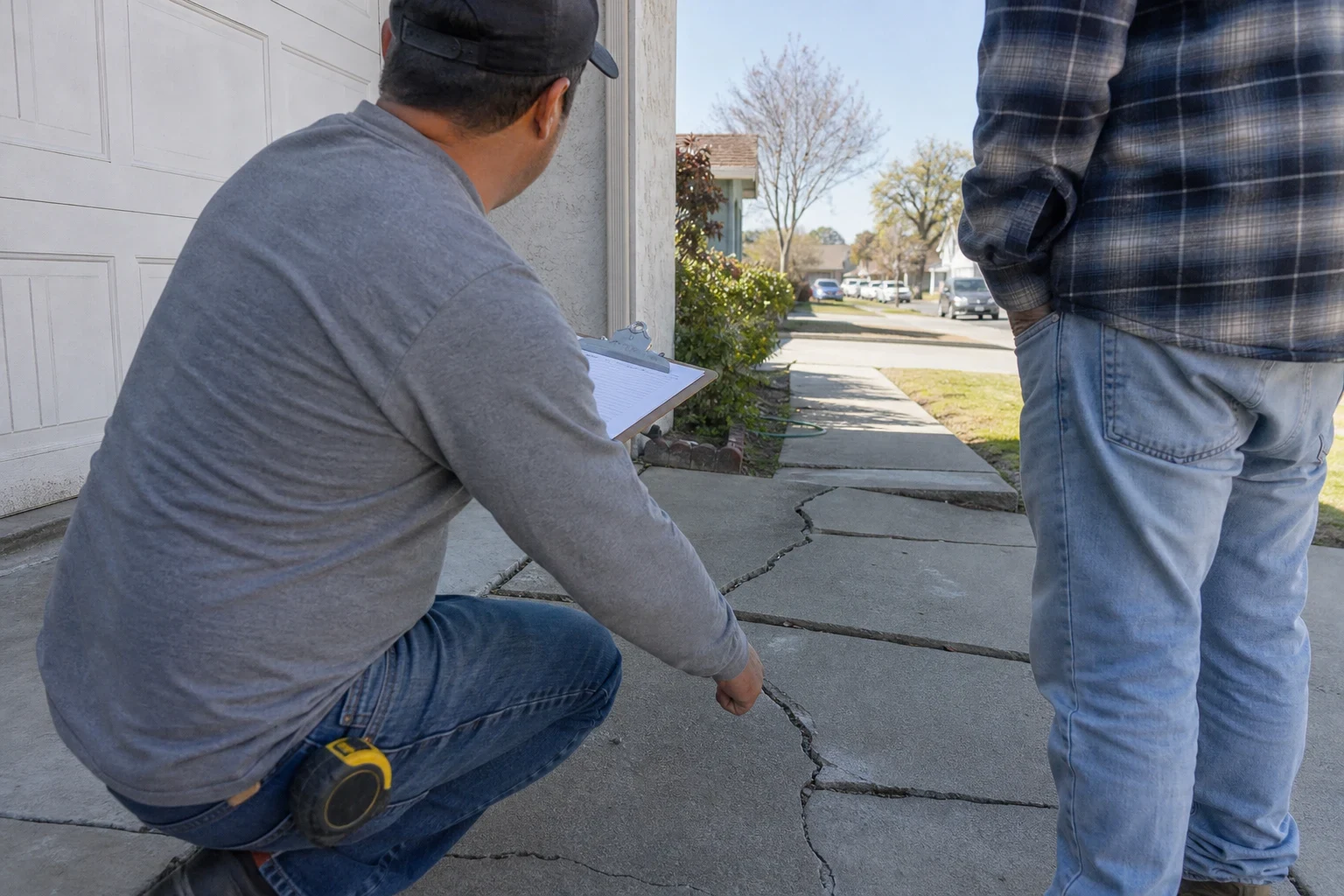
Roots or expansive soil can push one panel above its neighbor. When the offset reaches half an inch or more, the slab is no longer sitting flat on its base.
Brick or pavers that won't stay level
Rocking units, low spots and weeds in the joints usually point to a bedding sand layer that has washed away. A poured slab has no joints for that to happen in.
Dirt patches under the furniture
A worn-out lawn beneath the table, or mud carried indoors every rainy season, means the area needs a hard surface.
You plan to add a cover or outdoor kitchen
Posts and counters concentrate heavy loads in small spots. Sizing the slab thickness and steel for them now beats cutting into fresh concrete later.
Patio pricing: the items that change the number
We price your patio from what we measure and find on site, not from a flat rate per square foot. The written estimate you get after the visit breaks the job into separate lines. The factors below shift that total more than anything else.
Square footage and layout
Area sets how much concrete, base rock and labor the job takes. Curved edges and extra corners mean more form boards and more hand finishing.
Getting into the backyard
If the crew can wheel concrete a short distance, the pour stays simple. A long side path or a gate too narrow for power buggies can mean bringing in a pump.
Demolition and ground conditions
Breaking out an existing slab adds labor and dump fees. Clay that is soft or holding water may need a deeper dig and extra base material.
How the surface is finished
Broom finish is the most economical choice. Integral color, smooth troweled borders and stamped patterns each add material and time on the slab.
Drains and city permits
Area drains or a channel drain add parts and installation time. When the city requires a permit for your scope, that fee is listed on the estimate.
How a patio job runs
- 1
Site visit and written estimate
After your phone call we come out to measure, check grade and drainage, and look at access from the street. You get a written estimate with each item listed.
- 2
Protect, mark and dig
Underground utilities are marked through 811 before any digging. We cover nearby walls and windows, lay plywood over the lawn path, then excavate and compact the base.
- 3
Forms and steel
Forms, slope and rebar go in, and we check the fall with a level along every edge. Before pour day we walk you through the layout so the shape and joint lines are what you expect.
- 4
Pour and finish
Concrete arrives by truck or is pumped in when access is tight. Truck washout goes into a lined container, never into the street or storm drain. The crew screeds, floats, edges, joints and brooms the slab.
- 5
Cure, strip and clean up
Forms come out after a day or two. We backfill the edges, haul off the last of the debris and leave the yard swept and raked.
Common questions about concrete patios
How soon can we use the new patio?
Walking on it is usually fine 24 to 48 hours after the pour. Hold off on heavy furniture or a grill for about seven days. The slab keeps hardening for close to a month, so lift heavy pieces rather than sliding them during that time.
Will the new patio crack?
Concrete loses a little volume as it cures, so fine hairline cracks are normal. A compacted base, rebar and well-placed control joints keep that cracking narrow and steer it into the joints. The patio comes with our 1-year warranty, and we explain what it covers when we quote the job.
How do you keep the mess out of my yard and house?
We hang plastic over nearby walls, windows and doors before the pour and lay plywood across any lawn we have to cross. Truck and tool washout goes into a lined container. Cleanup happens every evening we are on site, not only when the job wraps up.
Do I need a permit for a patio?
That depends on the city and what the job includes. A plain slab at grade often needs no permit, while drains, footings for a patio cover or work close to a property line may. We confirm with the city and pull the permit if one is needed.
Can the patio match my driveway or walkway?
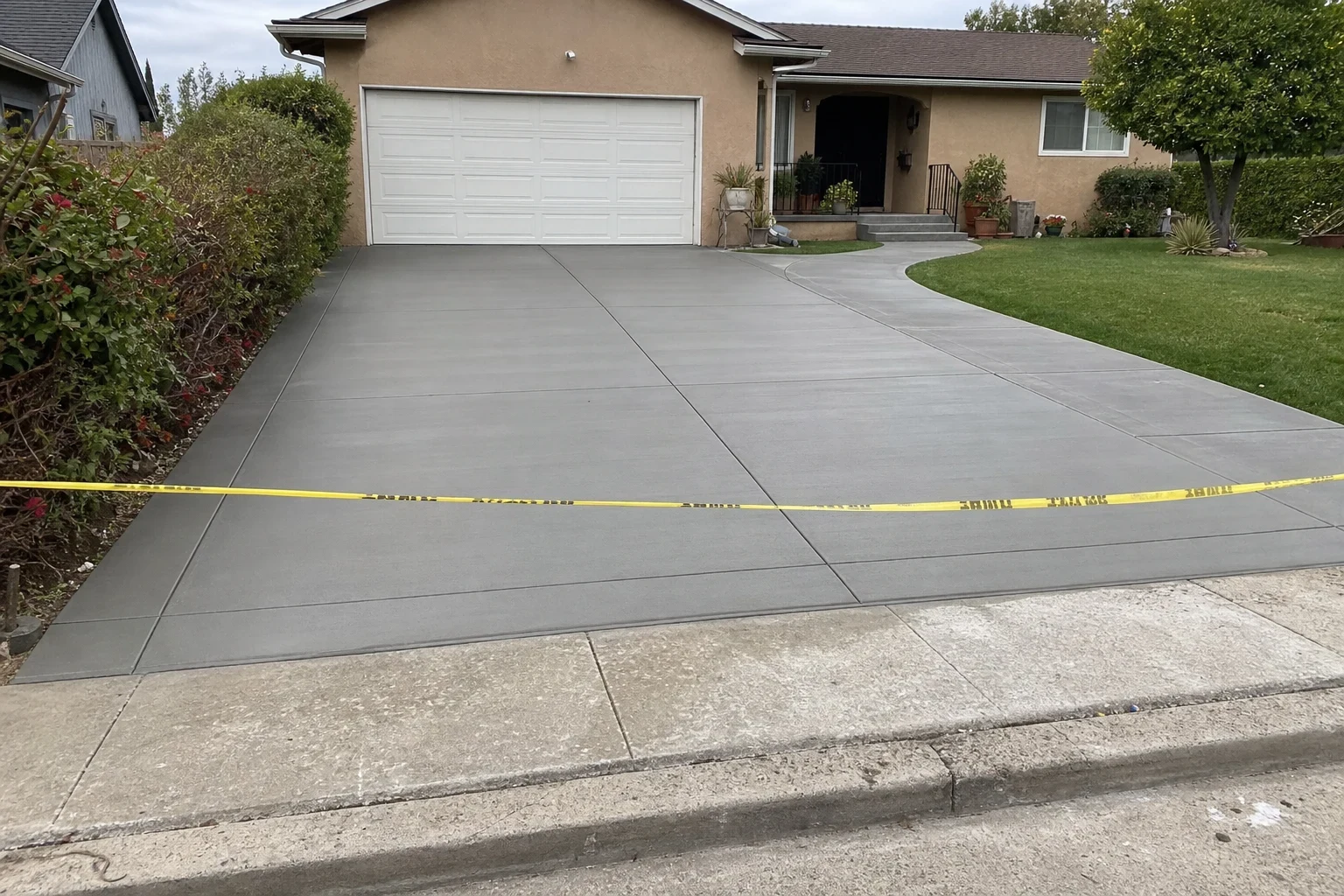
We can repeat the finish and add color to bring it close. Fresh concrete looks lighter for its first few months, then deepens as it cures and weathers. If more surfaces need work, our Driveways and Walkways and Sidewalks pages describe those projects.
Do I need to be home during the work?
Not for every hour. We do ask that someone joins us for the layout walk-through and that the side gate stays unlocked on work days. Keep pets indoors until the forms are pulled.
Ready to plan your patio?
Give us a rough footprint and let us know whether it is for dining, lounging or a future cover. We will book a visit, look at the yard and access, then put a written estimate in your hands.