ServicesConcrete Side Yards
Concrete Side Yards in Buena Park
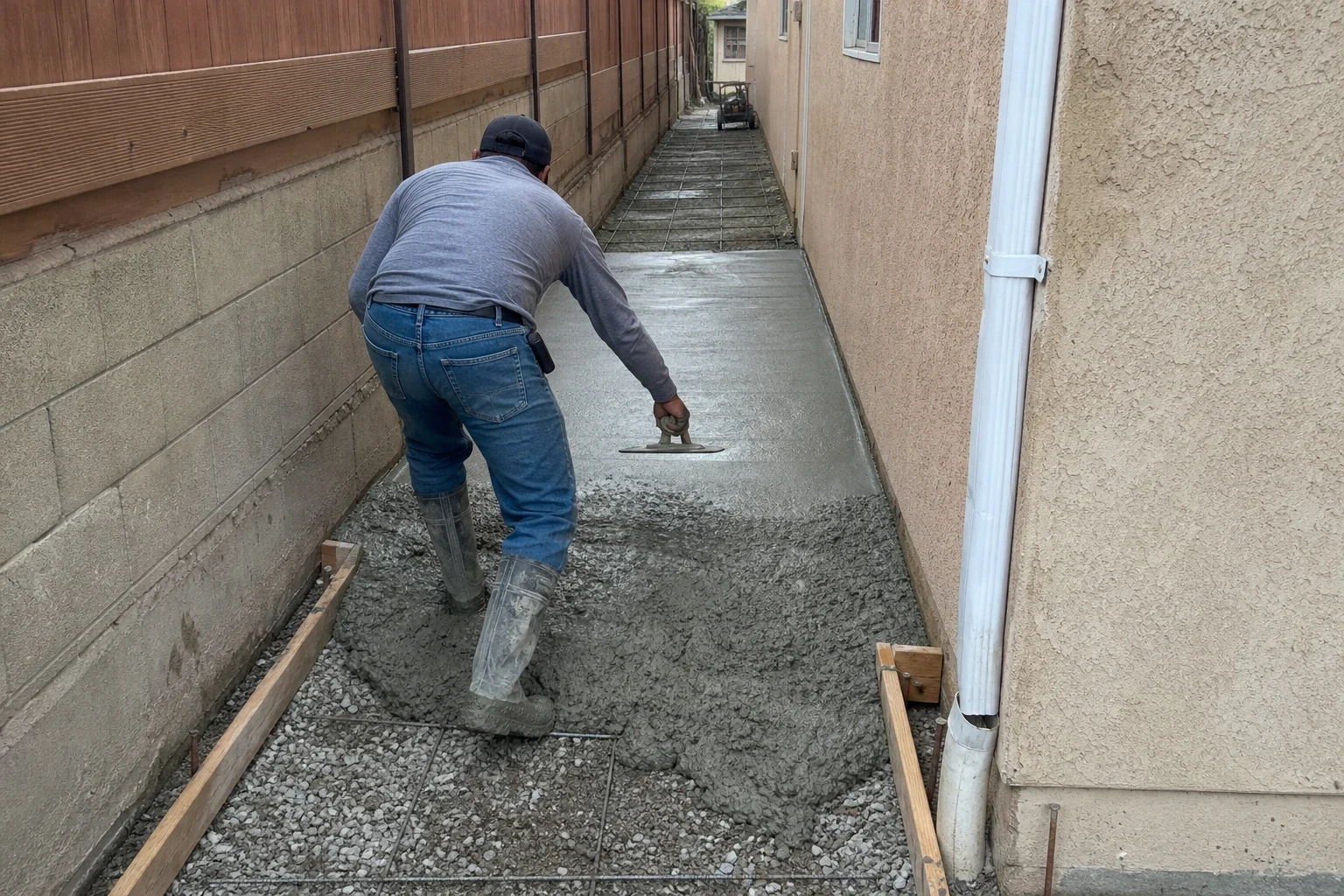
We pour side yards that carry water away from your foundation, stay below the stucco weep screed and give you a firm path for bins and equipment. Your walls, meters and AC unit are covered while we work, and the narrow space is swept clean each day.
What a Side Yard Pour Actually Fixes
The strip between your house and the property line is usually 4 to 8 feet wide, shaded and ignored. Bare dirt there turns to mud after rain, grows weeds along the fence and, worst of all, often slopes back toward the house. Water that sits against the footing soaks the soil under the slab edge, and with the expansive clay common around here, that wet-dry cycle moves concrete and stucco over time.
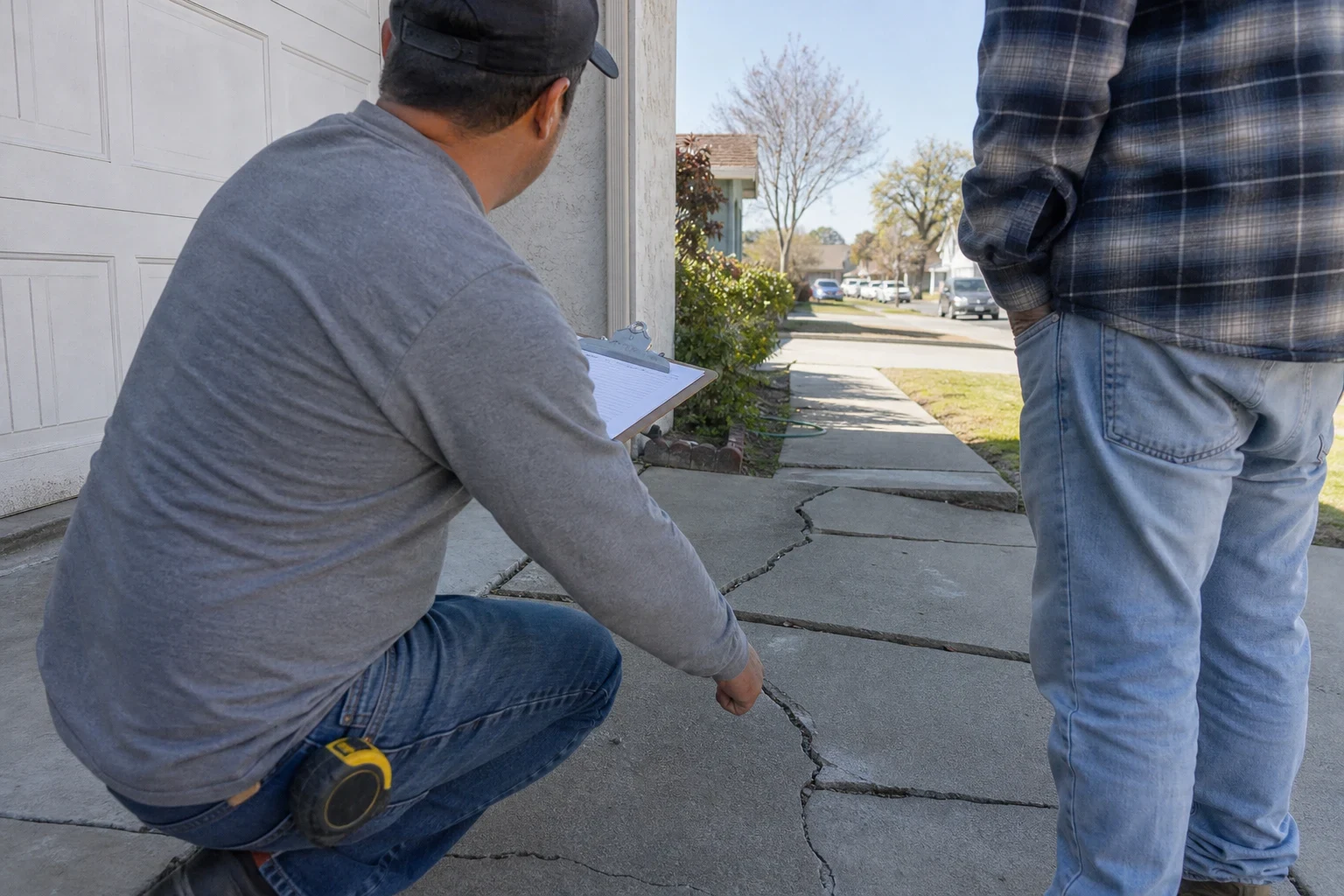
A concrete side yard replaces that dirt with a reinforced slab graded to shed water toward the street or a drain. It gives you a clean route for trash cans, a stable spot for the AC condenser and pool equipment, and a surface you can hose off. We have been pouring this kind of flatwork for 15+ years, and the details that matter most are the ones you cannot see once it cures: base depth, slope and where the slab meets your wall.
What's Included in the Work
- 01
Excavation and haul-off
We dig out roots, rock and organic soil to the depth the slab and base need. Spoils go into a bin or our truck, not onto your lawn.
- 02
Compacted aggregate base
A layer of crushed base rock is spread and compacted with a plate compactor. A firm, even base is what keeps a narrow slab from settling along the fence line.
- 03
Slope and drainage set to the house
We set forms so the finished surface falls away from your foundation, typically about a quarter inch per foot. Where the yard has no natural outlet, we can tie in area drains or a channel drain so water has somewhere to go.
- 04
Clearance at the weep screed
Most stucco homes have a metal weep screed at the bottom of the wall that lets moisture escape. We keep the concrete surface below it so the wall can still drain and you avoid trapped moisture behind the stucco.
- 05
Reinforcement and control joints
Rebar or wire mesh is placed on chairs in the middle of the slab, not left lying in the dirt. Control joints are cut at regular spacing so shrinkage cracks form in the joint instead of across the panel.
- 06
Finish suited to a walkway
A light broom finish gives traction on a shaded strip that can stay damp. If you want the side yard to match a stamped patio or a new walkway, we can talk through that on the call.
Questions about Concrete Side Yards?
Call(714) 640-6994Signs Your Side Yard Needs Concrete
Water pools against the wall
If puddles sit along the house after rain or after the sprinklers run, the grade is pointing the wrong way. That water ends up at your footing.
Mud tracked in from the bins
Rolling trash cans through soft dirt leaves ruts and carries mud to the driveway and into the garage.
Equipment sitting on dirt or loose pavers
AC condensers and pool pumps need a level, stable base. Pads that tilt strain refrigerant lines and plumbing connections.
Soil piled up on the stucco
When dirt or mulch has built up over the weep screed, moisture wicks into the wall. Lowering the grade and pouring below the screed corrects it.
Weeds you pull every month
A strip that never gets sun but always gets sprinkler overspray grows weeds fast. Concrete ends that chore.
How the Job Runs
- 1
Measure and plan by phone and on site
We talk through what the side yard needs to do, then look at the width, the existing grade, the weep screed height and where water can exit. The estimate we hand you breaks the job into separate line items, from excavation to finish, so you can see where the money goes.
- 2
Protect the house and route
Before digging, we cover stucco walls, windows, the gas meter and the AC unit with plastic sheeting, and lay plywood over any lawn or pavers we roll across. Narrow access usually means wheelbarrows or a line pump, so we plan the path ahead of time.
- 3
Excavate, base and form
We dig, compact the base, set forms to slope and place the steel. Each evening the dirt is swept up, tools are stacked out of the way and the gate is left closed.
- 4
Pour, finish and cure
Concrete is placed, screeded, floated, broom-finished and jointed the same day. Washout goes into a contained area so cement water never runs into your yard or the gutter.
- 5
Strip forms and clean up
After the slab cures enough, we pull forms, backfill the edges, remove the plastic and haul off every scrap. We walk the yard with you before we leave.
What Moves the Price
Side yards are long and narrow, so access and drainage often affect the cost more than square footage does. We price every job after seeing it, and the estimate shows each line so nothing appears later.
- Length and width
- More area means more concrete, base and labor. A 60-foot run costs more than a short connector between the gate and the driveway.
- Access for material
- If the only way in is a 3-foot gate, concrete goes in by wheelbarrow or pump hose. A pump adds a line item but saves hours of hand hauling.
- Grading and drainage work
- Lowering soil that sits above the weep screed, or adding area drains and pipe to the street, adds excavation and materials.
- Obstacles along the wall
- Gas meters, hose bibs, cleanouts and equipment pads all need forming around, which takes time.
Side Yard Questions
Will the concrete make my house wet if it's poured right up to the wall?
Not if it is done correctly. We slope the slab away from the house and keep it below the weep screed so the stucco can still breathe. An expansion strip is set where the slab meets the foundation so the two can move independently.
Can you work around my AC unit and gas meter?
Yes. We cover them during the work and form around them. If the condenser sits on a tilted pad, we can pour a level pad for it as part of the side yard.
How long before I can walk on it or roll trash cans across?
Walking on the new slab is generally okay after 24 to 48 hours. Give it roughly a week before rolling loaded bins or setting heavy equipment down, since the concrete is still gaining strength. In cooler months, curing slows and we'll suggest waiting a bit longer.
What credentials and coverage come with the work?
We hold a license from the California State License Board (CSLB). Side yard work comes with a 1-year warranty, and we explain what it covers when we go over your estimate.
What will my yard look like during the job?
Walls and equipment stay under plastic, and walk paths get plywood. Each day ends with the area swept and the gate closed, and the final cleanup includes hauling off all forms, spoils and packaging.
Ready to Get Your Side Yard Off the Dirt
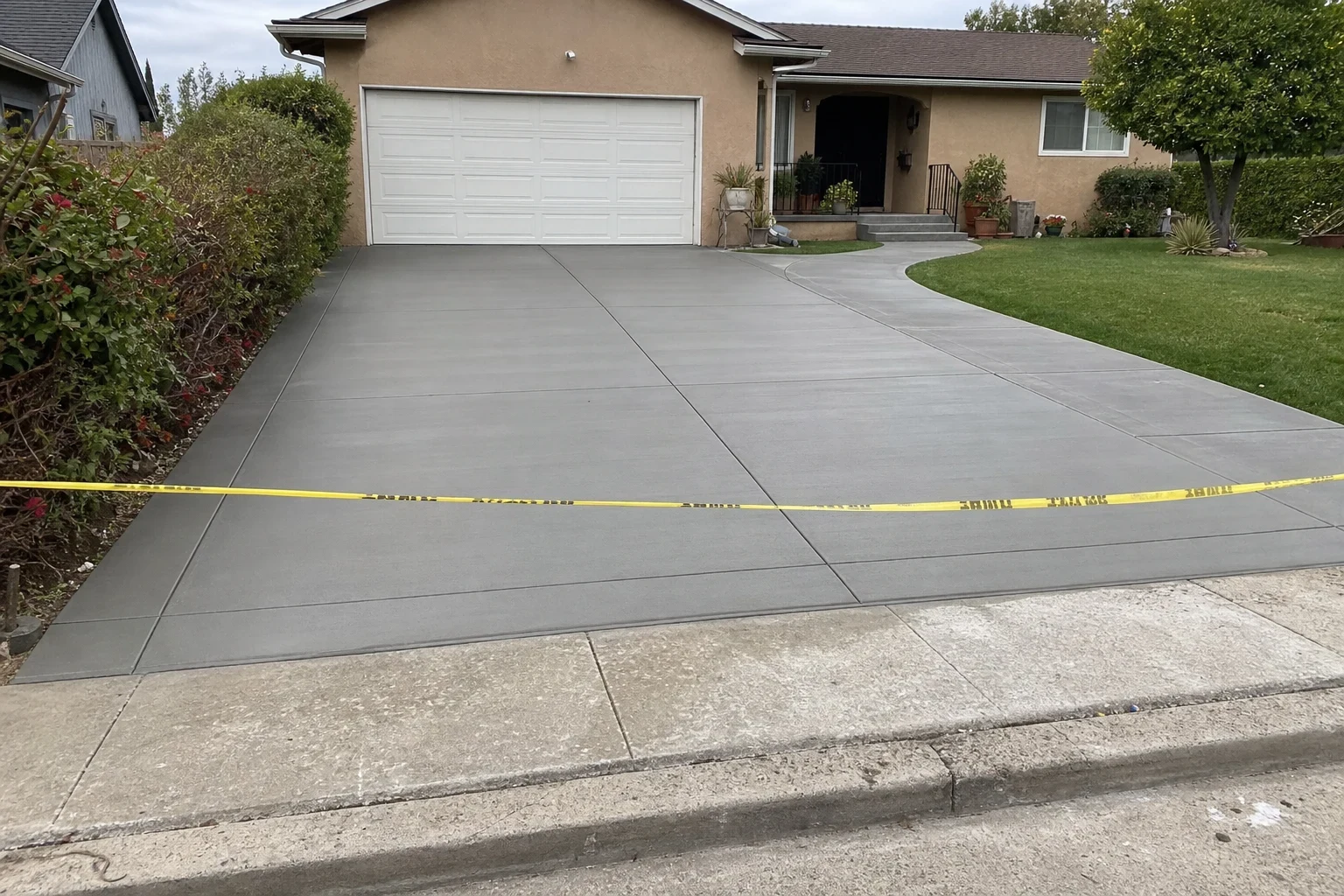
Tell us how wide the strip is, where water collects and what needs to sit or roll through it. We serve Buena Park along with Cypress, La Palma and Fullerton, and we'll give you your quote by phone after we've seen the site.