ServicesGarage Floors
Concrete Garage Floors in Buena Park
We tear out cracked, sunken or oil-soaked garage slabs and pour new ones on a compacted base with reinforcement, control joints and a slope that sheds water toward the door. Your walls, water heater and stored items stay covered, and the garage is swept clean every day.
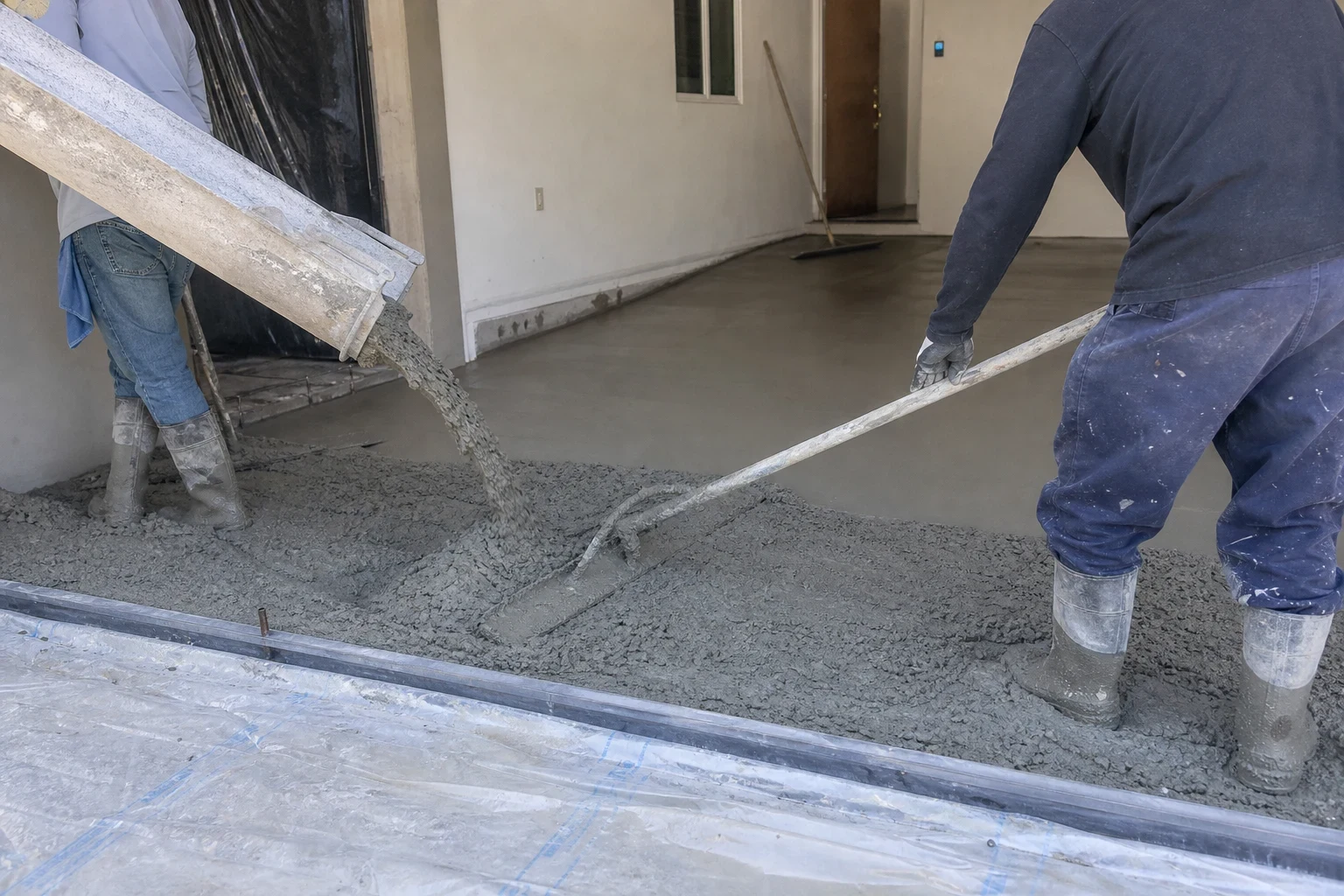
A New Slab Built for Cars, Not Just Foot Traffic
A garage floor carries a parked vehicle's weight on four small tire patches, takes hot tires and dripping fluids, and sits right against your home. When the old slab has settled, split or broken up, patching rarely holds. Replacing it with a properly built slab is the lasting fix.
Most older garage floors fail for the same reasons: a thin pour, a base that was never compacted, no rebar or wire mesh, and too few control joints. We correct each of those on the new slab. We typically pour four inches or more of a mix suited to vehicle loads. The steel is propped up off the base before the pour, because rebar lying in the dirt at the bottom does almost nothing to stop cracks; held at mid-depth, it actually carries load. Joints are saw-cut so shrinkage cracks open where we plan them.
We have been in business 15+ years and are licensed by the California State License Board (CSLB). A garage job happens inside your home's footprint, so we treat it that way: plastic on the walls, cardboard over the threshold to the house, and no concrete slurry tracked onto your driveway.
What Your Garage Floor Job Includes
Demolition and haul-off
We saw-cut the old slab along the stem wall and threshold, break it out and haul every piece away. Saw cutting is done wet to keep dust out of your garage and house.
Base preparation
We grade the subgrade, add class II base where it is needed and compact it with a plate compactor. A firm, even base is what keeps a new slab from sinking under the car.
Vapor barrier and reinforcement
Where your garage needs it, we lay a polyethylene vapor barrier to slow moisture coming up from the soil. Rebar is tied in a grid and lifted on chairs, and dowels can tie the new slab to the existing footing.
Slope, finish and joints
We screed the floor with a gentle fall toward the garage door so water from wet tires drains out instead of pooling. You get a smooth steel-trowel or light broom finish, and control joints are cut within the first day.
Daily cleanup
At the end of each day the floor area is swept, tools are stacked out of the way and debris leaves the property. Washout happens in a contained spot, never down your driveway or into the street.
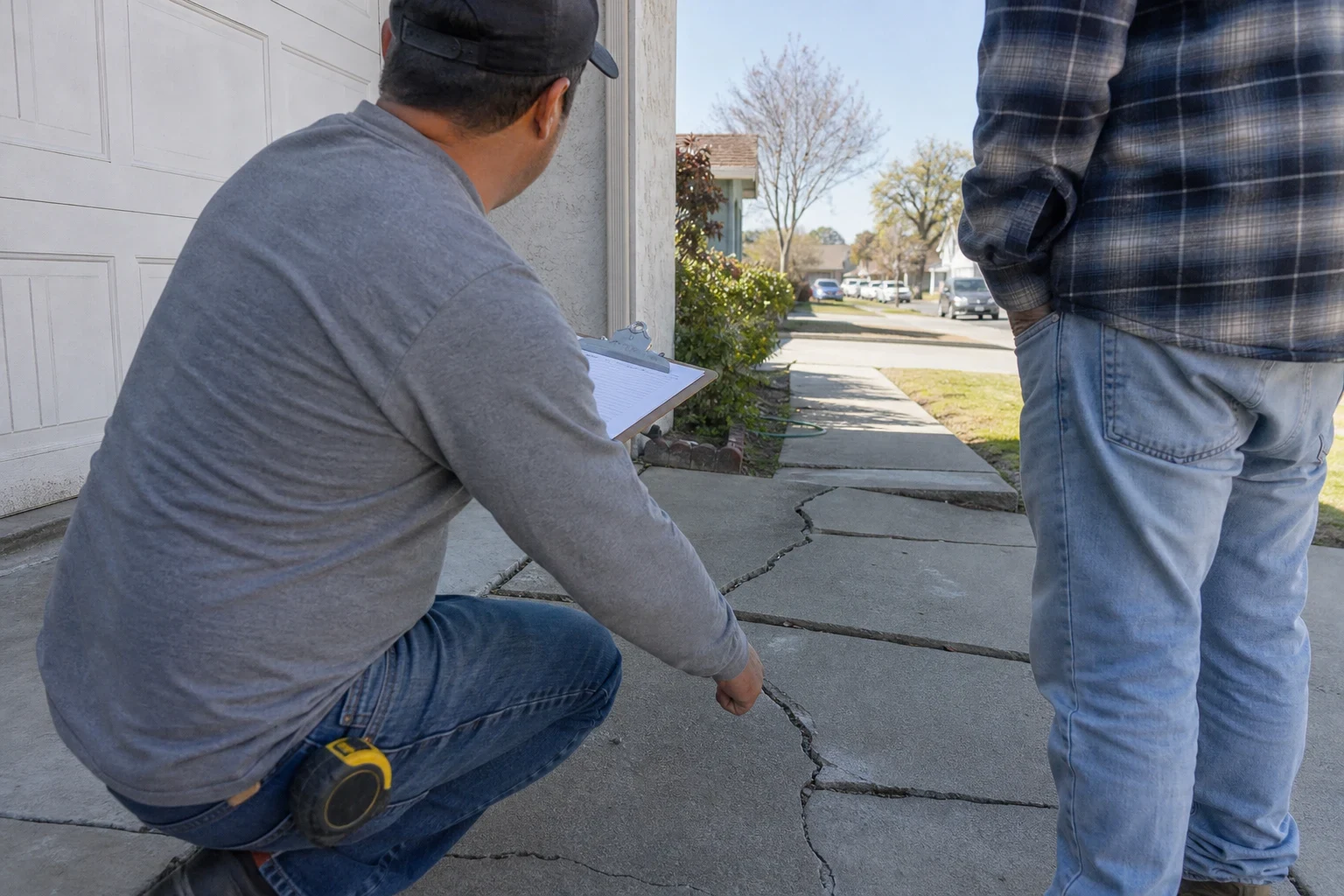
Signs Your Garage Floor Needs Replacing
- Cracks with one side higher
- A hairline crack is normal shrinkage. When one edge sits higher than the other, the base underneath has moved and the slab is no longer supported evenly.
- Sunken sections or pooling water
- Low spots that hold water usually mean the soil below washed out or was never compacted. Standing water near the house wall is the part to take seriously.
- Pitting and flaking surface
- Spalling, where the top layer flakes off, comes from a weak surface mix or overworked finishing. Once the paste is gone, the aggregate loosens and the floor keeps breaking down.
- Oil-saturated concrete
- Years of drips soak deep into porous concrete. Degreasers lift the stain on top, but the oil keeps wicking back up and coatings will not bond to it.
- Slab pulling away from the wall
- A widening gap at the stem wall or a step forming at the door to the house tells you the slab is settling. That gap also lets water and pests in.
How the Work Runs
- 1
Walkthrough on the phone and on site
We talk through what you are seeing, then measure the garage, check the threshold height at the house door and look at truck access. You get a written estimate that lists demolition, base, reinforcement and finish as separate lines.
- 2
Protect and clear
You move vehicles and stored items out; we cover the walls, water heater, electrical panel and the doorway into your home with plastic and tape. If a permit is needed for your project, we take care of it.
- 3
Demo, base and steel
Removal and base prep usually take a day or two depending on slab thickness. We compact, set forms and tie the rebar so the pour day starts on time.
- 4
Pour, finish and cure
The concrete is placed, screeded to slope, troweled and saw-cut. We remove the plastic, sweep out and leave the floor curing. Foot traffic is fine after about a day, cars after roughly a week.
What Sets the Price of a Garage Floor
Every garage is quoted from its own measurements. The square footage matters, but what is under and around the old slab often moves the price just as much. We explain each line so you know what you are paying for.
- Size and thickness of the old slab
- A thicker or heavily reinforced slab takes longer to break out and weighs more to haul away. Two-car and three-car garages scale the material and labor accordingly.
- Condition of the soil below
- Soft or wet subgrade may need to be dug out and replaced with compacted base. We show you what we find once the old concrete is up.
- Access for the concrete truck
- If the truck can reach the garage door, we chute the concrete straight in. Tight access may mean a pump or wheelbarrows, which adds time.
- Reinforcement, finish and sealer
- Rebar spacing, dowels into the footing, a vapor barrier and a penetrating sealer each add to the cost and to how long the floor lasts.
- Permits
- Some garage slab replacements require a permit and inspection. When yours does, that fee is listed on the estimate.
Garage Floor Questions
- How long will my garage be out of use?
- Most garage floors take two to four working days from demolition to pour. After that, the slab needs about a week of curing before you park a car on it. Light foot traffic and storing a few boxes are fine sooner.
- Will the dust get into my house?
- We cut the concrete wet, which keeps most dust down, and we seal the door into your home with plastic before demo starts. The garage is swept at the end of each day so nothing gets tracked inside.
- Can you match the height at the door into the house?
- Yes. We measure the existing step and threshold before we tear anything out and set the new slab height to keep that step consistent. Code typically requires the garage floor to sit below the house floor, and we plan for that.
- Should I seal or coat the new floor?
- A penetrating sealer helps the slab resist oil and tire marks and can go on after curing. If you plan an epoxy coating later, tell us so we can give it the right surface finish and leave sealer off.
- Is the work covered after it is done?
- Your new garage floor comes with our 1-year warranty. Concrete still develops some hairline shrinkage cracks, which is why we cut control joints to guide where they form.
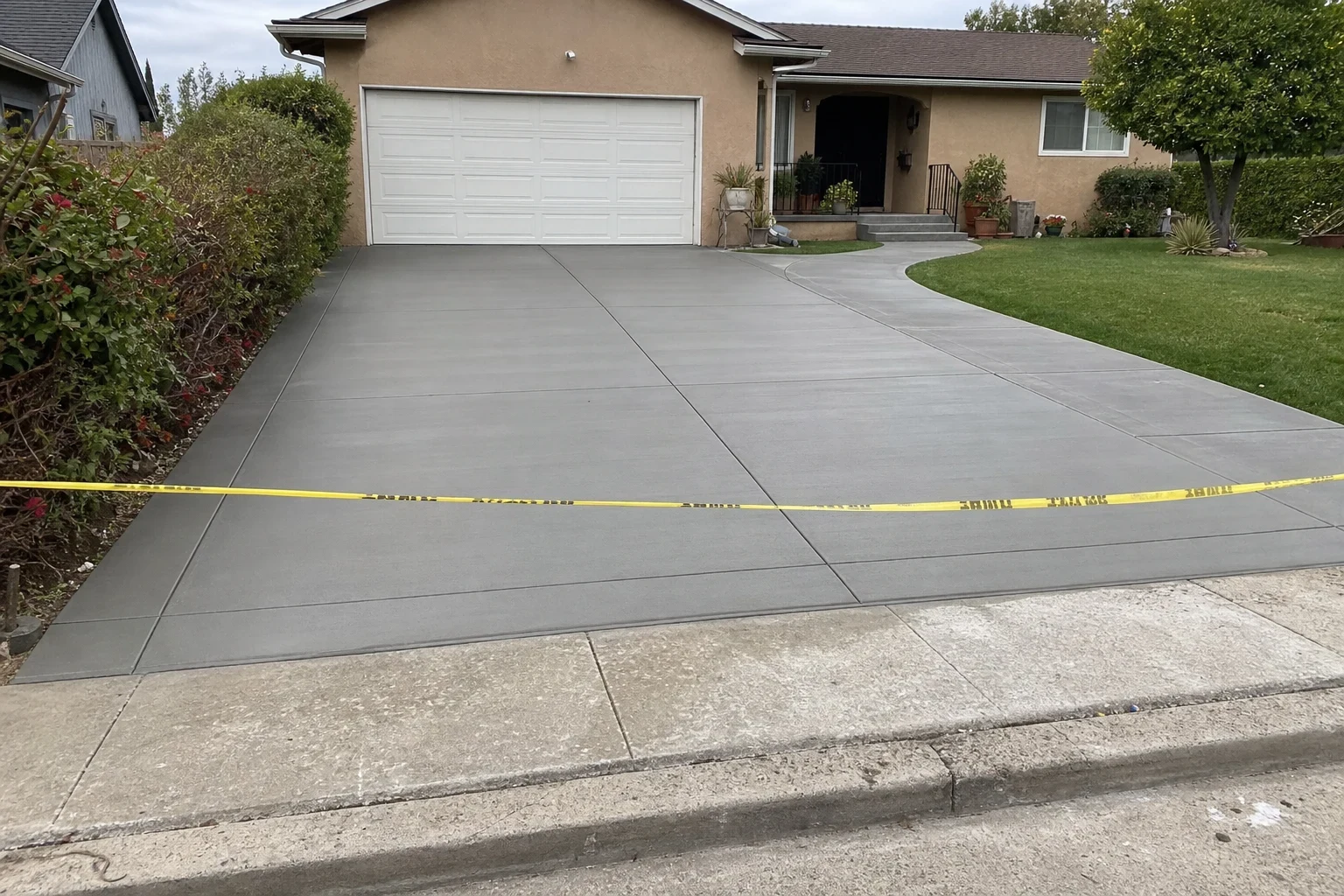
Ready for a Solid, Clean Garage Floor
Tell us the size of your garage and what the current slab is doing. We will explain the work involved and set up a time to measure.