ServicesDriveways
Concrete Driveways in Buena Park
We tear out worn driveways and pour new ones on a compacted base with steel reinforcement and properly spaced joints. Your lawn, garage door and stucco stay covered while we work, and the street gets swept before we leave each day.
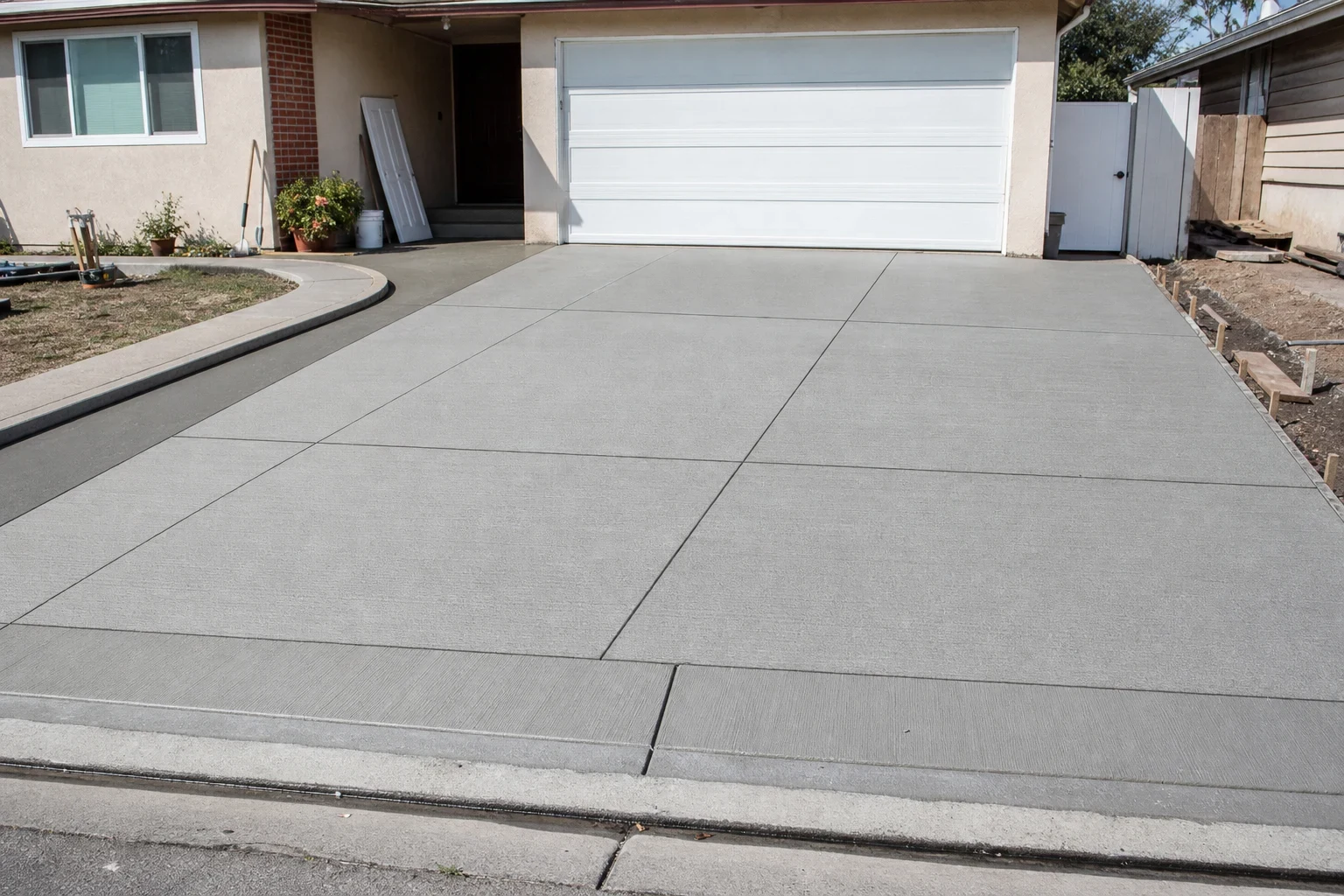
A New Driveway, Built From the Base Up
Most driveway failures start below the surface. A thin or poorly compacted base settles, water finds the low spots, and the slab cracks along lines nobody planned. When a driveway has reached that point, patching the top doesn't fix the cause. Removing the old concrete and building a correct base does.
We handle full driveway replacement and new driveways, including the approach to the street. We've been pouring concrete for 15+ years and are licensed by the California State License Board (CSLB). Many homes here still have their original mid-century slabs, often only 3 to 3.5 inches thick with no steel in them. Our new driveways are typically 4 to 5 inches thick, reinforced, and sloped so water runs away from your garage.
We also work hard to keep the mess contained. Demolition and a concrete pour are heavy, dusty jobs, so we plan the protection and cleanup as carefully as the slab itself.
What Your Driveway Job Includes
- Demolition and haul-off
- We break out the old slab with a breaker and skid steer and haul the broken concrete to a recycler. Nothing is left piled on your lawn overnight.
- Subgrade and base
- We excavate to depth, cut out soft or root-filled soil, and place crushed aggregate base compacted in lifts with a plate compactor. A solid, even base is what keeps the new slab from settling.
- Forms, steel and grade
- We set forms to a slope of about a quarter inch per foot so water drains toward the street. Rebar is tied in a grid and raised on small supports so the steel ends up at mid-depth in the concrete, which is the position where it holds cracks tight.
- Pour, finish and joints
- We place a mix suited to vehicle loads, finish it with a broom texture for traction, and tool or saw-cut control joints about a quarter of the slab depth. Joints give shrinkage a straight line to crack along instead of a random one.
- Protection and daily cleanup
- Plywood goes over grass and planters along the haul path, and plastic covers the garage door and nearby walls. The concrete truck washes out into a lined bin, never the gutter, and we sweep and rinse the sidewalk and street at the end of each day.
Signs Your Driveway Is Due for Replacement
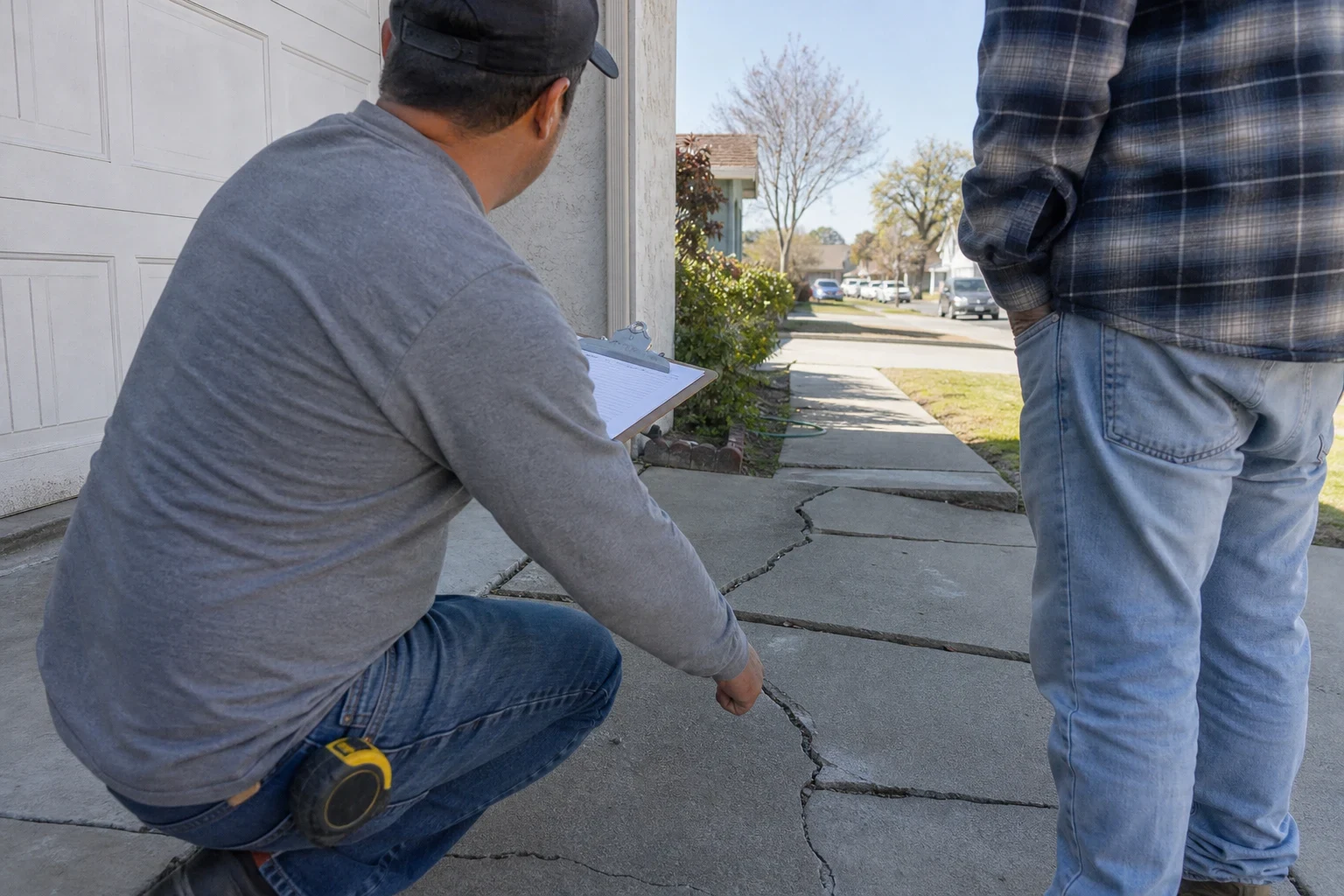
Sections sinking or tilting
When slabs drop at a joint or tip toward the garage, the base underneath has washed out or compacted. The panel will keep moving until the base is rebuilt.
Lifted slabs near trees
Roots from parkway trees and nearby trees push slabs up and create trip edges. We remove the affected sections and cut back roots where it is safe for the tree before the new base goes in.
Spiderweb cracking
A web of cracks across one panel usually means the slab is too thin for the load or has no reinforcement. Sealing the cracks won't add the strength it's missing.
Water pooling against the garage
Puddles at the garage door point to a slab that has lost its slope. Standing water stains, wears the surface and can seep under the door.
Spalled, flaking surface
A surface that chips and scales exposes the stone underneath and keeps getting worse with traffic. On an older, thin slab, replacement is usually the sounder choice.
What Moves the Cost of a Driveway
Every driveway is priced from its own measurements and conditions, so we don't quote numbers before seeing it. These are the items that change the total most. We'll go through each one on the phone and at the walkthrough.
Square footage and thickness
A two-car driveway with a wide apron takes more concrete and steel than a single lane. Going from 4 to 5 inches for heavier vehicles adds material.
Demolition and soil conditions
Thick old slabs, buried footings and root-heavy soil take more time to remove and more base to replace.
Approach and permit
Replacing the approach or curb cut means a city permit and work to the city's standard, which adds cost and scheduling.
Access for equipment
A narrow side yard or no room for the truck can mean a pump or extra hand labor.
Finish choices
A standard broom finish is the baseline. Color, exposed aggregate or a stamped concrete border adds labor and material.
How the Job Runs, Day by Day
- 1
Measure and write the scope
We walk the driveway with you, check the slope, the approach and any trees, and explain what we'd remove and how thick the new slab should be. You get your quote by phone and in writing, line by line.
- 2
Permit and protection
If the job includes the approach or curb in the public right-of-way, we pull the city permit before work starts. On day one we lay plywood, cover the garage door and stucco, and mark sprinkler lines.
- 3
Demo and base
Breaking out, hauling off and compacting the base usually takes one to two days depending on size. We sweep up and clear debris each afternoon so your entry stays usable.
- 4
Pour day
Forms and steel are checked, the concrete is placed and finished, and joints are cut. The washout bin leaves with the crew, and the street is rinsed before we go.
- 5
Cure and handoff
Stay off it on foot for a day and keep cars off for about seven days while the concrete gains strength. We pull the forms, backfill the edges, and walk the finished driveway with you.
Driveway Questions We Hear Often
How long until I can park on my new driveway?
You can walk on it the day after the pour, and passenger cars can use it after about seven days. Concrete keeps gaining strength for roughly 28 days, so we suggest keeping heavy trucks and trailers off until then.
Will the new driveway crack?
As the water in the mix dries out, a slab loses a little volume, and that pull leaves hairline cracks in nearly every driveway. Control joints, rebar and a compacted base keep those lines narrow and guide them into the joints, where they are hard to spot. That is the reason we don't leave out any of those steps.
Can I stay home and use my garage during the work?
You can stay home. The garage is blocked from demo day until the slab cures, so plan to park on the street for about a week. We'll give you the exact days before we start.
Do you warranty driveway work?
Yes. Every driveway we pour is backed by a 1-year warranty. Your written quote spells out what that warranty covers, so you know before any work begins.
What happens to my lawn and sprinklers?
We lay plywood over the lawn along our path and flag sprinkler lines before any digging. If a line runs under the driveway, we reroute or sleeve it before the base goes in.
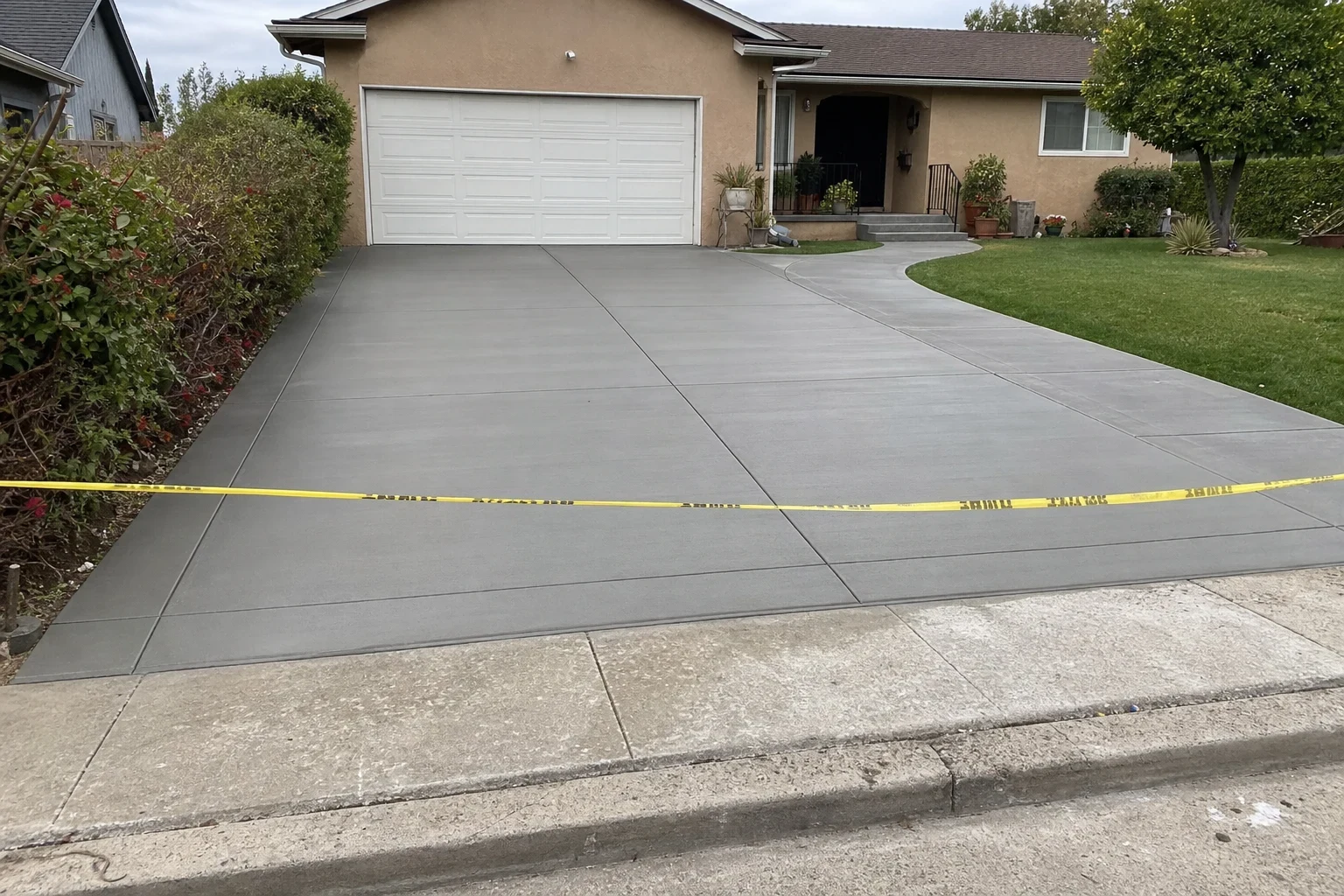
Ready for a Driveway That Drains and Holds Up
Tell us about your driveway, the cars it carries and any trouble spots. We'll explain what it needs and set up a time to measure.