ServicesStamped Concrete
Stamped Concrete in Buena Park
We pour new stamped concrete for patios, walkways, driveways and pool surrounds, with color built into the mix and the pattern pressed while the slab is still plastic. Release agent and color dust stay contained, and your home is cleaned up before we leave each day.
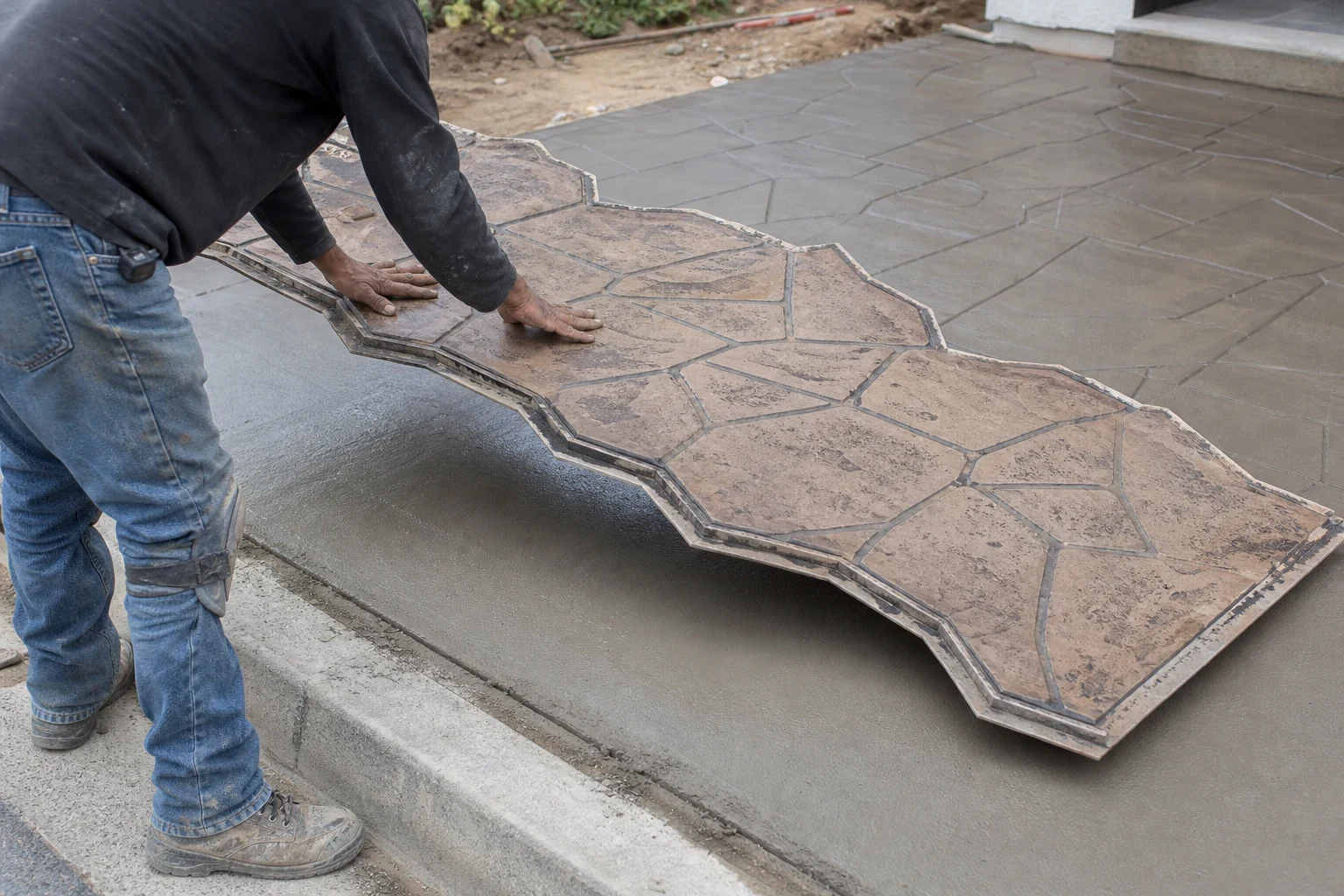
What stamped concrete is and when it makes sense
Stamped concrete is a standard reinforced slab that gets its look in the first hour or two after placement. We color the concrete, apply a release agent, then press polyurethane texture mats into the surface to imprint slate, flagstone, cobble, brick or wood plank. The result is one continuous slab with the appearance of laid stone and none of the loose joints that let weeds and ants through.
It is the right call when you want the look of pavers or natural stone on a new patio, walkway or pool deck and prefer a surface that does not shift or settle unit by unit. It is less suited to areas that need frequent trenching for utilities, since cutting a patterned slab leaves a visible patch.
Stamping is also the messiest stage of any flatwork job. Release powder is a fine, pigmented dust that drifts onto stucco, windows and plants. We mask and cover before it comes out of the bucket, which is how we have worked through more than 15 years in business.
What the work includes
- Base and reinforcement
- We excavate, compact the subgrade and set a crushed aggregate base, then place rebar on chairs so the steel sits mid-slab where it can actually resist cracking. A pattern only looks good as long as the slab underneath stays flat.
- Integral color or color hardener
- Integral color is mixed through the full depth at the plant, so a chip shows the same color underneath. For brighter tones we broadcast a dry-shake color hardener, which also densifies the top layer.
- Release agent and texture mats
- Powdered or liquid release keeps the mats from sticking and adds a secondary antiquing tone in the low spots. We use full-size mats for the field and flexible mats to finish against walls and steps.
- Control joints placed in the pattern
- Joints are cut along grout lines where possible so they read as part of the design instead of a random line through a stone.
- Wash-off and sealing
- After curing, we pressure wash off excess release and roll on a sealer. On pool decks and steps we add a fine anti-slip grit to the sealer.
- Daily protection and cleanup
- Plastic sheeting on walls and windows, covered planters, and a contained washout area for tools and the truck chute. Forms, mats and debris leave with us.
Signs stamped concrete is right for your project
You are replacing a tired slab
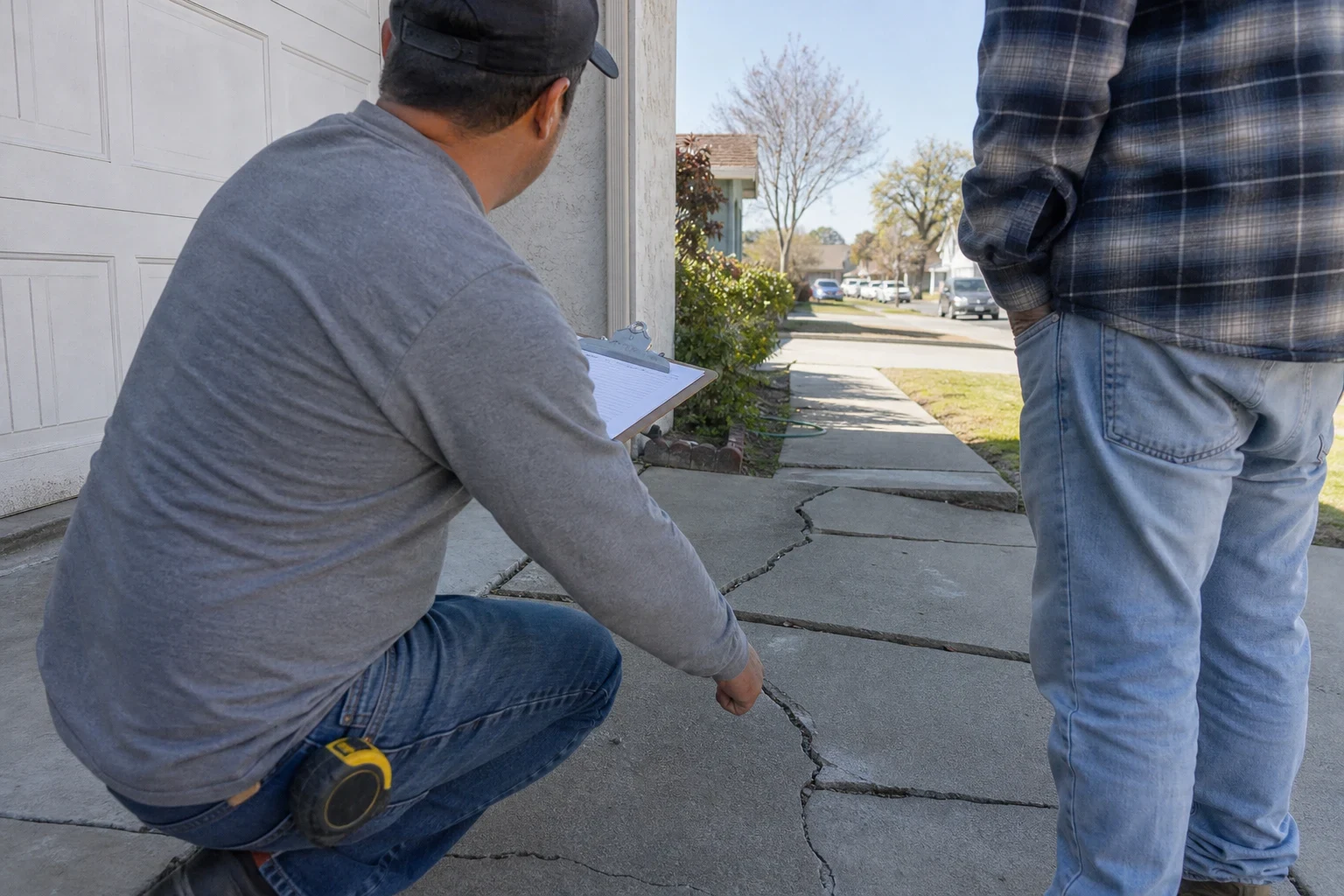
An old patio or walkway with heaving sections, wide cracks or a worn broom finish is a good candidate for tear-out and a new stamped pour.
Pavers keep shifting
Pavers on a weak base settle, rock and grow weeds in the joints. A stamped slab gives a similar look as one monolithic piece.
Plain gray clashes with your home
If the hardscape looks flat next to your stucco, tile roof or trim, color and pattern can tie it together.
You want stone without the stone price structure
Natural flagstone requires individual setting and grouting. Stamping reproduces the texture in a single pour.
Your pool deck feels hot or slick
Lighter integral colors stay cooler underfoot, and textured mats plus grit in the sealer improve traction around wet areas. See our Concrete Pool Decks page for more.
What moves the cost of stamped concrete
Stamped work costs more than a broom finish because of color materials, mats, extra labor at the critical setting window and sealing. The biggest swings come from the site itself. We price each job after seeing it and put every line in writing.
Square footage and shape
Larger, simple rectangles stamp efficiently. Curves, tight corners and many edges mean more hand detailing with flex mats.
Demolition and access
Tearing out an existing slab and hauling it away adds time, and narrow side-yard access may mean wheelbarrows or a pump instead of the truck chute.
Color method and pattern
Integral color, color hardener, a second antiquing tone and multi-pattern borders each add material and steps.
Base and drainage work
Soft soil, extra base depth or added drains to move water away from your home increase prep.
Permits
Most backyard flatwork needs none, but driveway approaches touching the public right-of-way usually require a city permit.
How a stamped concrete job runs
- 1
Layout and color selection
We measure the area, check drainage slope away from your home, and show color and pattern samples so you can see them against your house. You get a written estimate that lists each item.
- 2
Prep day
We protect walls, windows and landscaping first, then demolish any old slab, grade, compact and set forms and steel. The site is swept and stacked before we leave.
- 3
Pour and stamp
The concrete is placed, screeded and floated, color hardener goes on if specified, then release and mats. Timing matters here: stamp too early and the pattern slumps, too late and it will not take the texture.
- 4
Cure, wash and seal
Joints are cut, the slab cures for several days, and we wash off the release, keeping the runoff contained. Sealer goes on once the surface is dry.
- 5
Walkthrough
We remove protection, clean up and walk the finished slab with you. The work carries our 1-year warranty.
Stamped concrete questions
Will stamped concrete crack?
Any concrete can show hairline cracks as it shrinks while curing. We decide where that movement goes with a compacted base, rebar set mid-slab and joints cut along pattern lines, so a crack tends to disappear into a grout line. A properly built slab stays structurally sound even if a hairline shows up.
How often does it need resealing?
Plan on a reseal roughly every two or three years for most stamped surfaces. UV exposure wears sealer down fastest on slabs facing south or west, so those spots can call for attention earlier. A fresh coat brings the color back to full depth and keeps oil and food stains from soaking in.
Is it slippery around a pool?
Sealed concrete can get slick once it is wet. For pool surrounds and steps we pick patterns with deeper texture and blend a fine anti-slip grit into the sealer, which gives bare feet noticeably better grip.
Will the color dust get on my house?
It should not when the job is run carefully. Before any release agent goes down, we sheet the stucco and windows, cover plants and close off vents. After curing we wash off the residue and contain the runoff so it stays out of planting beds and the street.
What stands behind the work?
We are licensed by the California State License Board (CSLB). Each stamped project also comes with our 1-year warranty, and we walk the finished slab with you before we call the job done.
When can we walk on the new slab or park a car there?
Walking across it is generally safe once the concrete has cured for 24 to 48 hours. Hold off on parking cars or trucks for roughly a week, and allow a few extra days when the weather runs cool, because concrete gains strength more slowly at lower temperatures.
Plan your stamped concrete with us
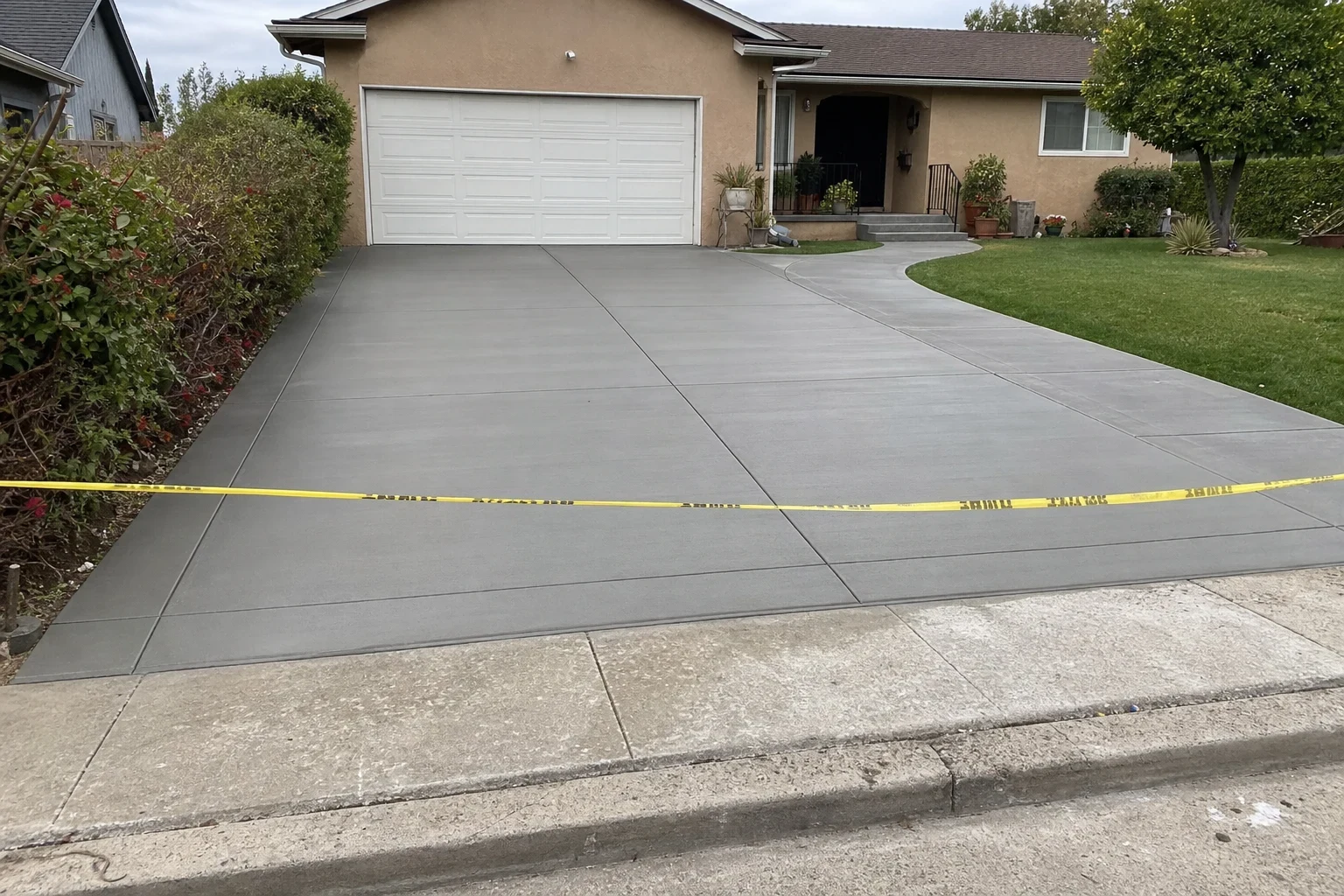
Tell us the area, what is there now and the look you want. We will talk through colors, patterns and prep, then schedule a visit to measure and give you a written estimate.