ServicesWalkways and Sidewalks
Walkways and Sidewalks in Buena Park
We tear out tired, uneven walks and pour new ones on a compacted base, sloped so water runs off and jointed so cracks land where we plan them. Your lawn and planters are protected while we work, and the site is cleaned up before we leave each day.
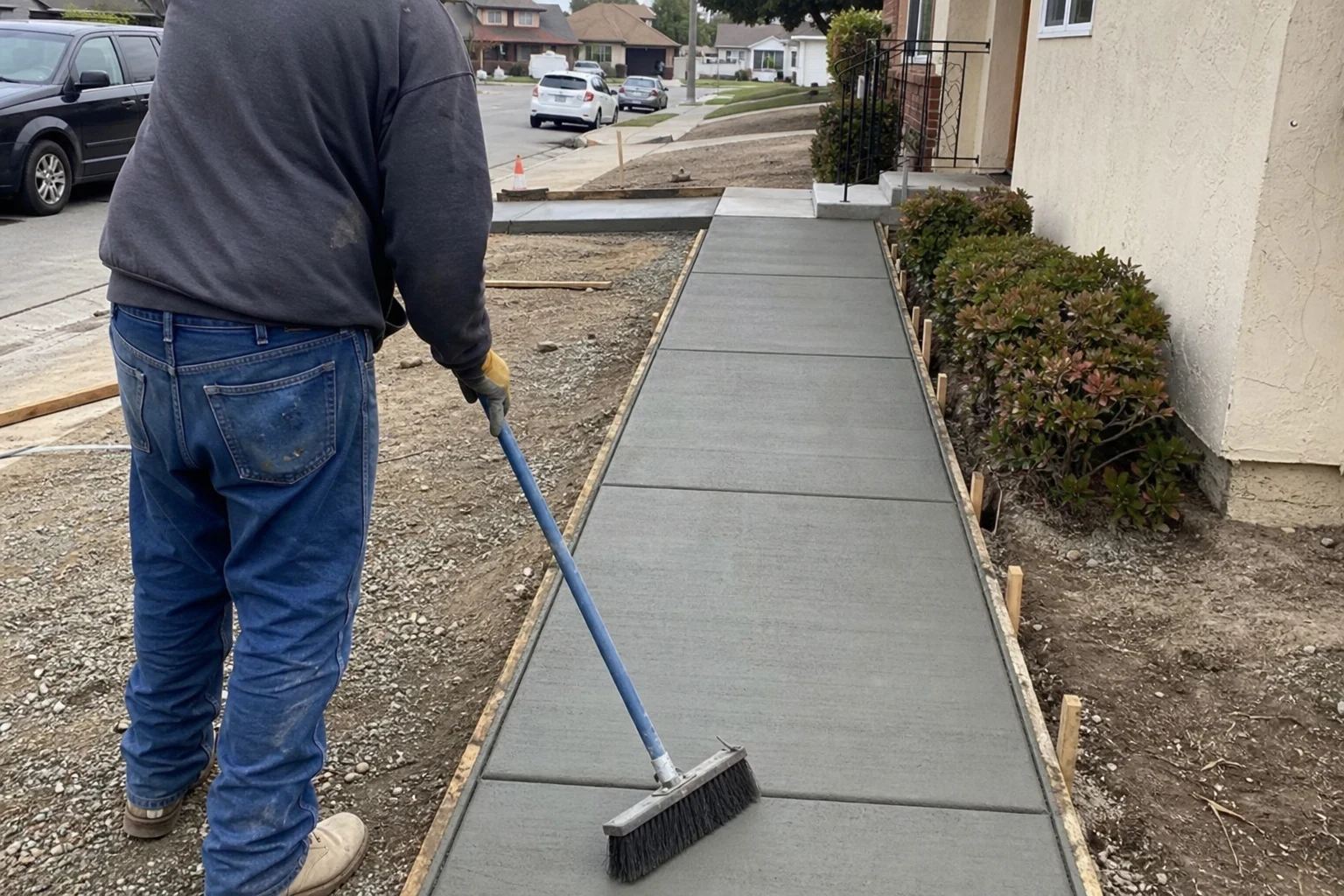
A walk that stays flat and sheds water
A walkway takes more abuse than its size suggests. It carries foot traffic, trash bins and moving dollies, and it sits right beside lawns, sprinklers and tree roots that push and soak the soil underneath. Most walks that heave or break apart failed below the surface: thin concrete poured on loose fill, no control joints, or a slope that sent water toward the foundation.
We build the parts you never see. That means digging out to firm soil, compacting a gravel base, setting forms to a slope of about a quarter inch per foot, and placing control joints at spacing matched to the walk's width. Clay soils common in the area swell when wet and shrink when dry, so a solid base is what keeps the new slabs level for years.
We have been pouring concrete for homeowners here for 15+ years, and the approach on a walkway is the same as on a driveway: protect your home, keep the work area tidy, and leave a finished surface you can use with confidence.
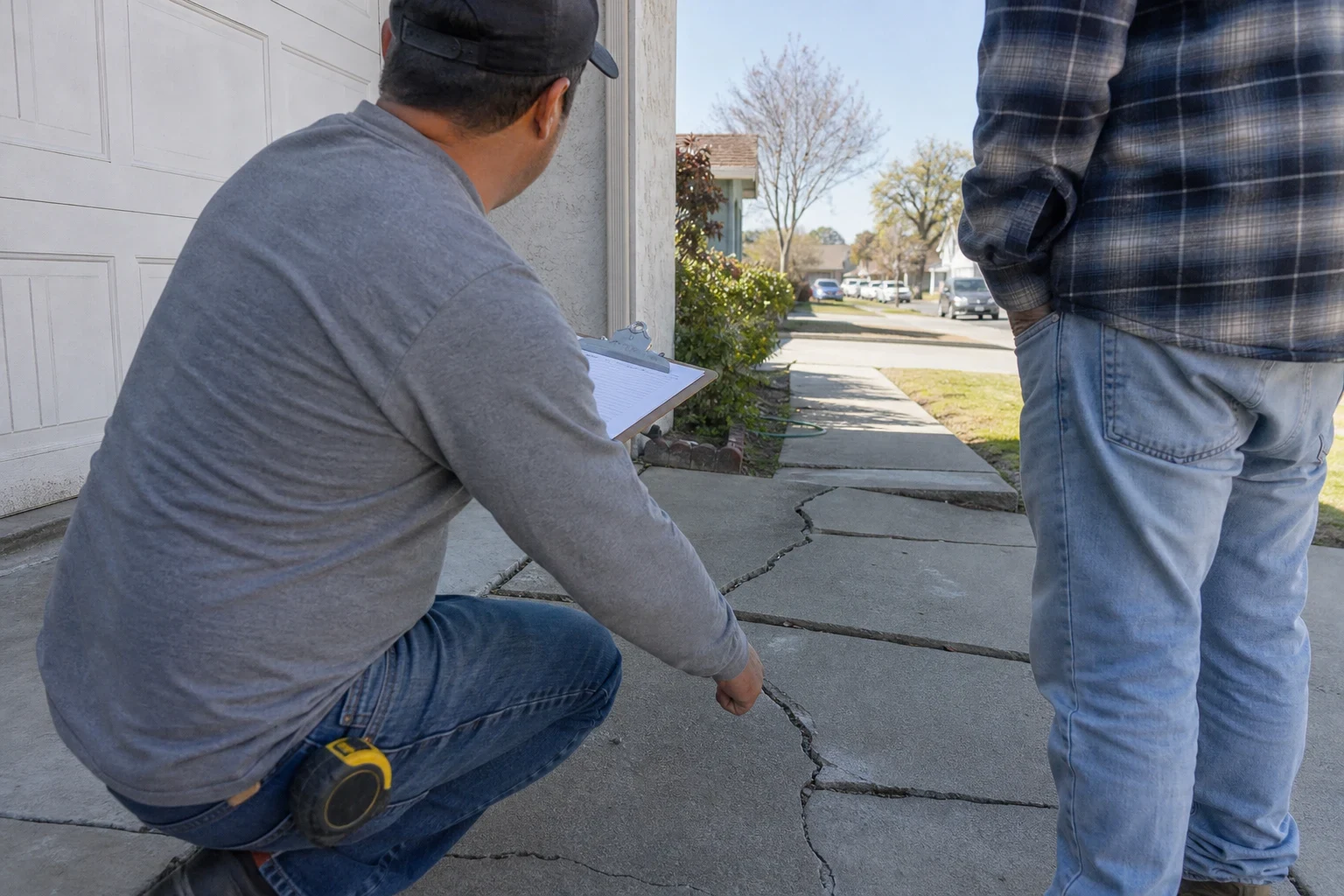
What a new walkway job includes
- 01
Demolition and haul-off
We saw-cut clean edges where the old walk meets the driveway or porch, break out the slabs and haul the debris away. Broken concrete does not sit in your yard overnight.
- 02
Excavation and compacted base
We dig to firm soil and place a gravel base, compacted with a plate compactor in lifts. This layer drains water away from the underside of the slab and spreads the load evenly.
- 03
Forms, slope and reinforcement
Forms are set to the finished height and pitched so water runs off toward the lawn or the street, not toward your house. Rebar or wire mesh is placed on supports so it ends up inside the concrete, where it actually holds cracks tight.
- 04
Joints and isolation strips
Control joints are tooled or cut at regular intervals so shrinkage cracks form in straight lines. Where the walk meets your foundation, a step or the driveway, we install expansion felt so each piece can move without breaking the other.
- 05
Finish for traction
Most walks get a light broom finish with smooth tooled edges, which grips well when wet from sprinklers. If you want a decorative look, ask about stamped concrete.
- 06
Daily cleanup
We wash tools and chutes into a contained washout, not your planters or the gutter, and sweep the work area at the end of each day.
Questions about Walkways and Sidewalks?
Call(714) 640-6994Signs your walkway is ready to be replaced
Lifted edges and trip points
When one slab sits higher than the next, usually from roots or swelling soil, the step becomes a tripping hazard for guests and older family members.
Water pooling or running toward the house
Puddles that linger after rain or sprinklers mean the walk has settled out of slope. Water draining toward the foundation is a problem worth fixing with a properly pitched new walk.
Spalling and crumbling surface
Flaking or pitted concrete often comes from a weak mix or poor curing when it was first poured. Once the top layer goes, the rest wears quickly.
Cracks running in every direction
Random cracks across a slab, rather than along joints, usually mean too few joints or no reinforcement. Pieces start shifting independently.
A route that no longer works
Sometimes the walk is fine but in the wrong place. A wider path for bins, a new route to a side gate or a curved approach to the front door can all be laid out from scratch.
How the work goes, start to finish
- 1
Look and measure
We walk the route with you, check the grade, note roots, sprinkler lines and drainage, and talk about width and finish. You get a written estimate that lists demolition, base, concrete and finish separately.
- 2
Protect and demolish
Before any breaking starts, we lay plywood over the lawn for our wheelbarrow path and cover nearby stucco, windows and plants with plastic. Then the old walk comes out and gets hauled off the same day.
- 3
Base, forms and inspection of layout
We compact the base, set forms and reinforcement, and check the slope with a level before you see the final layout. If the walk crosses the public parkway, we handle the city permit the work requires.
- 4
Pour, finish and cure
The concrete is placed, screeded, floated, jointed and broom finished. We keep the slab moist or apply a curing compound so it gains strength evenly instead of drying too fast on a warm day.
- 5
Strip forms and clean up
After the concrete sets, we pull the forms, backfill the edges with soil and rake the area. Foot traffic is usually fine after a day or two; we will tell you when.
What sets the price of a walkway
A walkway price is mostly length and width, then everything that sits under and around it. We give you a line-item estimate after looking at the site so you can see where the money goes. Nothing gets added later without a conversation first.
- Size and thickness
- Square footage drives the amount of concrete, base and labor. A walk that also carries bins or a garden cart may be poured thicker at certain spots.
- Removal of the old walk
- Breaking out and hauling existing concrete adds labor and disposal. Thicker or heavily reinforced old slabs take longer.
- Access and site conditions
- Narrow side yards, steps along the route, tree roots that need cutting or soft soil that needs extra base all add time.
- Finish and edges
- A standard broom finish is the most economical. Stamped patterns, color or curved forms take more material and hand work.
- Permits
- Work in the public sidewalk area usually needs a city permit, which adds a fee and an inspection step to the schedule.
Walkway and sidewalk questions
How thick should a concrete walkway be?
Four inches over a compacted gravel base is the usual standard for foot traffic. Where the walk crosses a driveway apron or will carry heavier loads, we thicken that section. The base matters as much as the concrete, since it keeps the slab supported and drained.
Will you also redo the city sidewalk along the street?
In many cases we can, but the strip between your yard and the curb falls under the city's rules first. That kind of job usually needs a city permit plus an inspection, and we pull the permit ourselves. At the estimate visit we explain which requirements apply at your address.
What happens to my lawn and sprinklers?
We cover the lawn along our work path with plywood and mark sprinkler heads and lines before digging. If a line runs under the old walk, we point it out and plan around it so you are not left with dry patches.
How long before we can walk on it?
Light foot traffic is generally fine after a day or two, depending on the weather. Concrete keeps curing for weeks, so we suggest keeping heavy items like loaded carts off it a little longer.
Who stands behind the walk once it is poured?
We do. Our company is licensed by the California State License Board (CSLB), and each new walkway comes with our 1-year warranty.
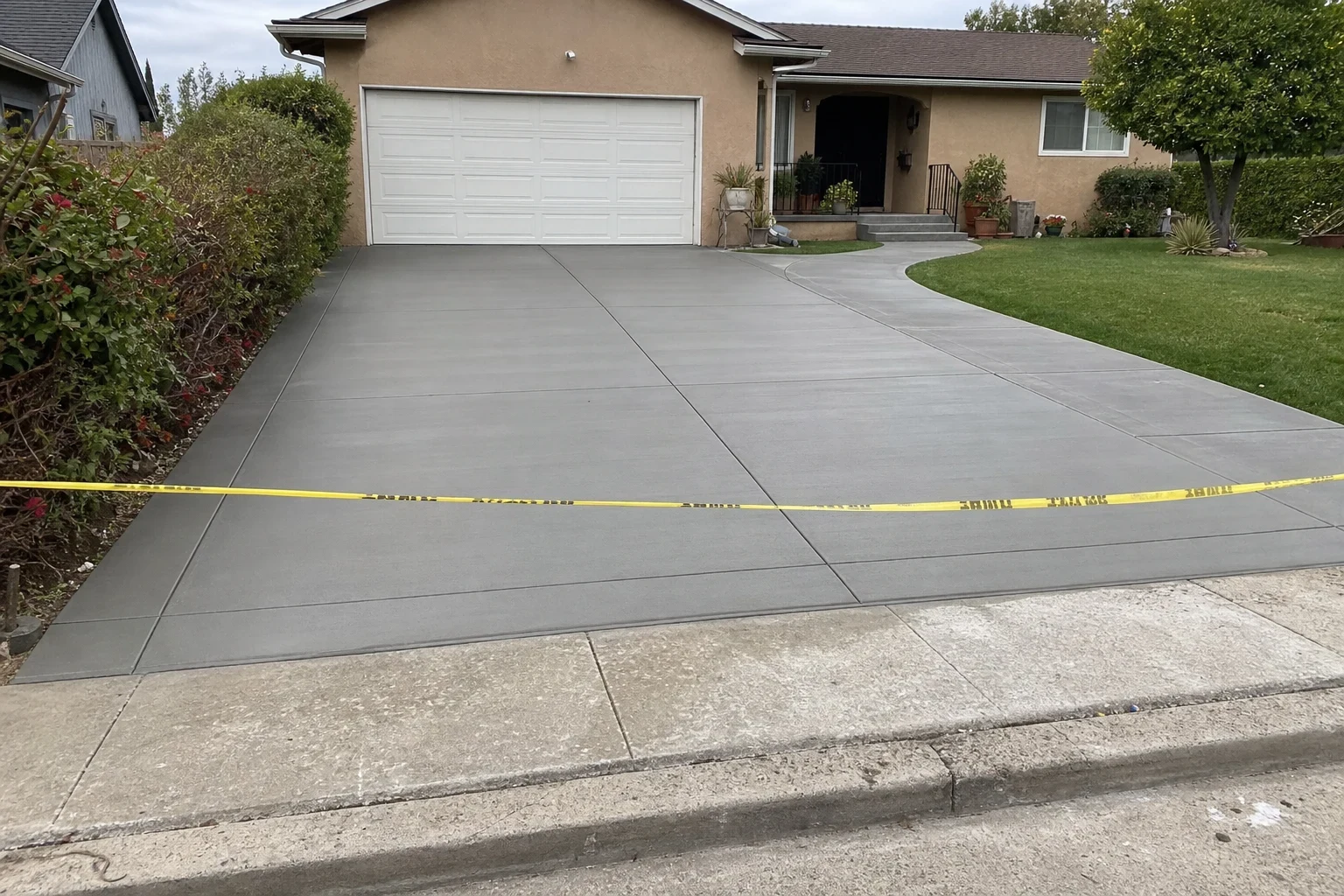
Ready for a walkway that drains and stays level
Tell us where the walk runs and what is bothering you about the current one. We will set up a visit to measure and give you a written estimate, and you will know how we protect your yard before we start.