ServicesRV Parking Pads
Concrete RV Parking Pads in Buena Park
We pour RV parking pads thick enough for a loaded motorhome, reinforced with steel and sloped to shed water. Your rig gets a level, solid place to sit. Your lawn and side yard are protected during the work and left clean when we go.
A Slab Built for Weight, Not Foot Traffic
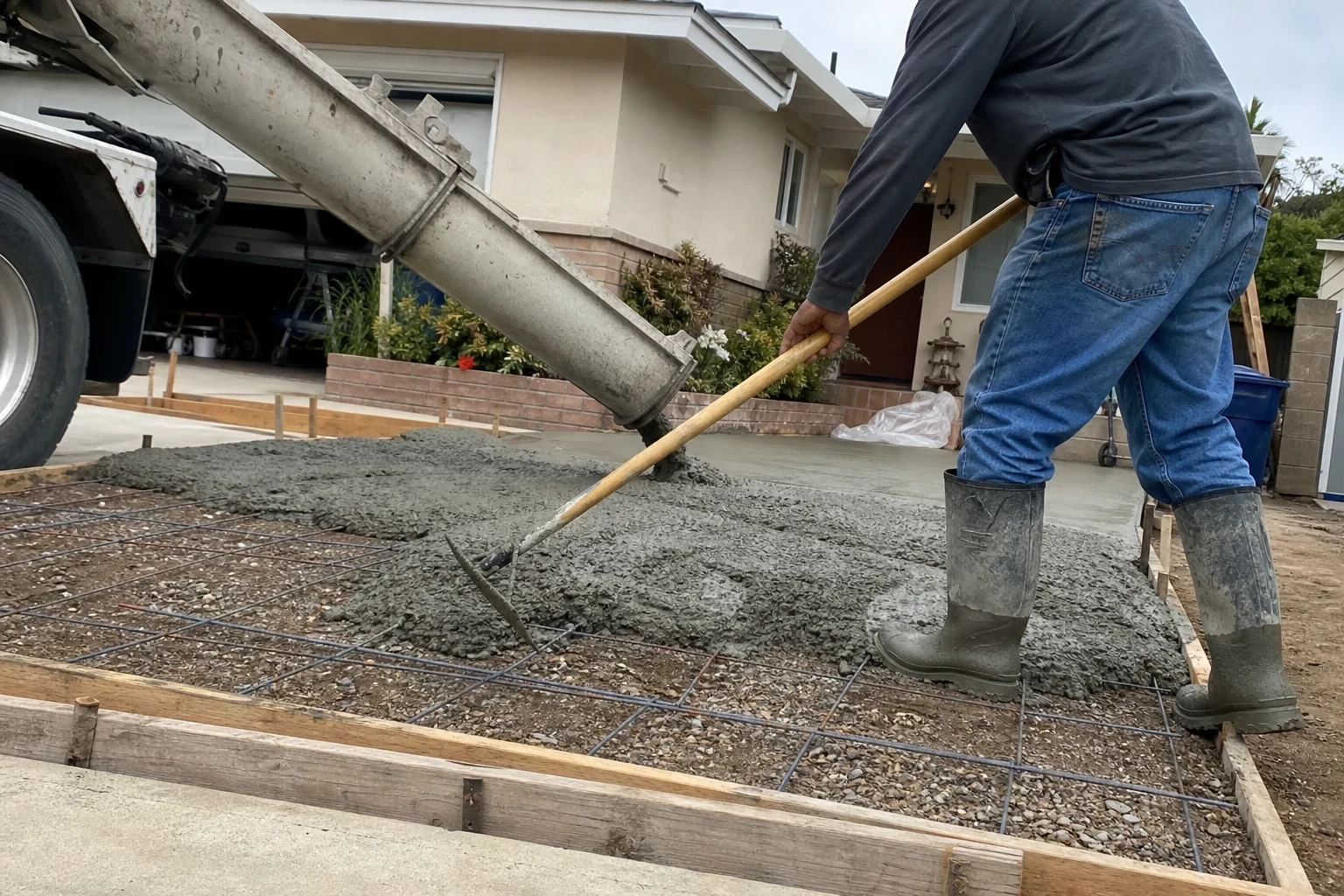
An RV is the heaviest thing most people ever park at home. A loaded Class A motorhome can weigh well over ten tons, and all of it rests on a few tire patches. A standard 4-inch walkway slab was never designed for that, so it cracks at the tires and settles at the edges. We build RV pads as structural slabs: a deeper excavation, a compacted aggregate base, a thicker pour and rebar tied on a grid.
Clay soils that swell when wet and shrink in the dry months are common around Buena Park. That movement is why base preparation matters more than the concrete itself. A well-compacted base spreads the load and keeps the slab from rocking as the ground shifts.
We have been pouring concrete here for 15+ years, and RV pads are where shortcuts show first. We size each pad for your actual rig, its wheelbase and how you back it in.
What Goes Into Your RV Pad
- 01
Layout sized to your rig
We measure your RV, trailer or boat, the turning path from the street and the gate width. The pad is laid out with room to open slide-outs and walk around the unit.
- 02
Excavation and compacted base
We dig out sod, roots and soft soil, then place crushed aggregate base and compact it in lifts with a plate compactor. Compacting in thin layers is what keeps the base from settling later.
- 03
Steel reinforcement
Rebar is tied in a grid and raised on small supports to hold it at mid-depth, the zone of the slab where steel actually resists cracking. Bars left resting on the soil add very little strength.
- 04
Thicker, stronger pour
We pour a deeper slab than a patio or walkway, using a higher-strength mix suited to heavy vehicle loads. Thickened edges help where tires roll on and off.
- 05
Drainage slope and control joints
The surface is pitched slightly so rain and wash water run away from your home and off the pad. Control joints are cut at planned spacing so shrinkage cracks form in the joint, not across the slab.
- 06
Broom finish for traction
A broom finish gives tires and shoes grip when the pad is wet. If you want the pad to match a decorative area, we can talk through stamped concrete options.
Questions about RV Parking Pads?
Call(714) 640-6994Signs It Is Time for an RV Pad
Tires sinking into gravel or grass
Soft ground lets one side settle, which throws the rig out of level and strains the frame and leveling jacks. A slab keeps every wheel on the same plane.
Weeds and mud around the rig
Gravel pads grow weeds and track mud into the coach and your home. Concrete hoses clean.
An old slab cracking under the load
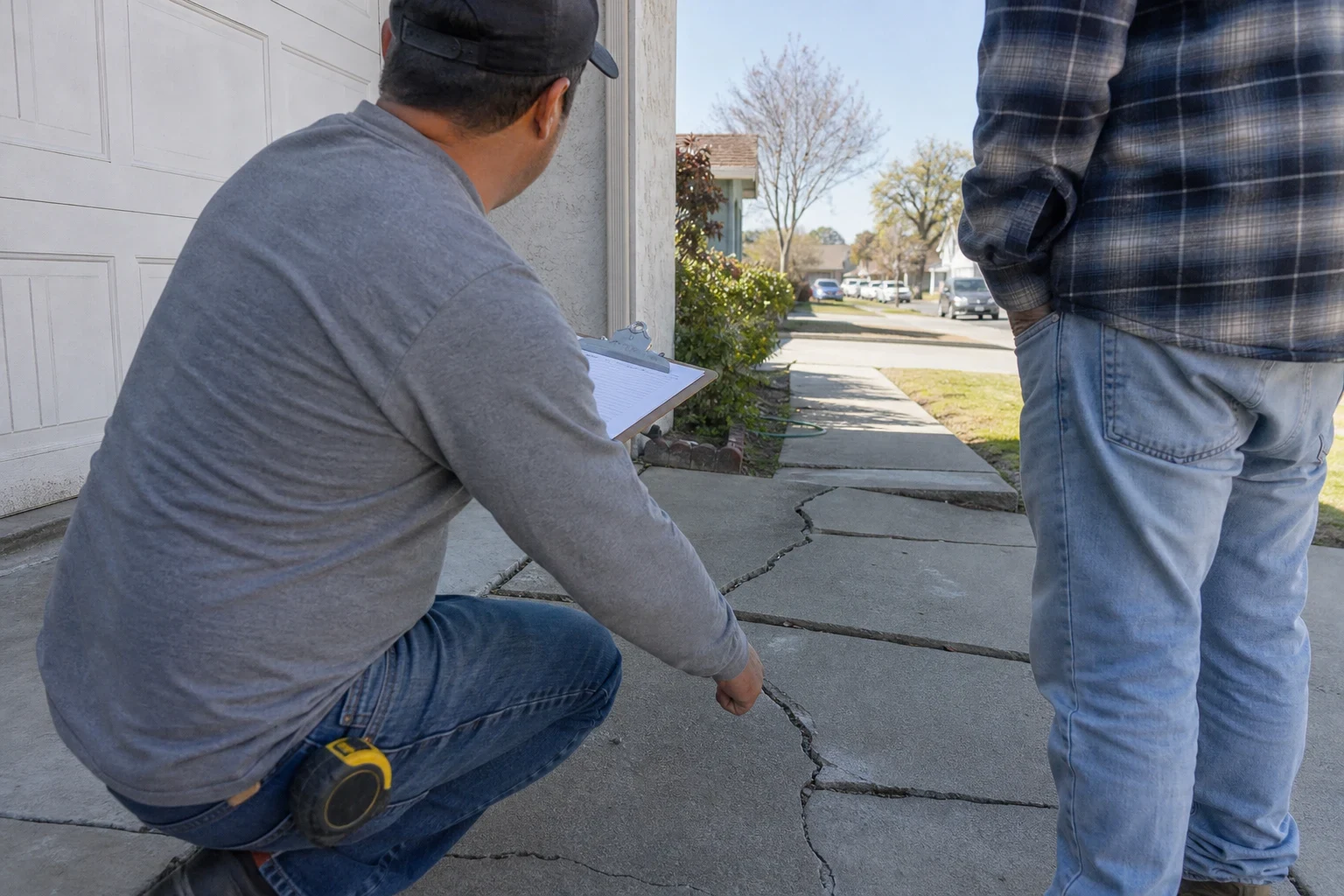
Thin pads poured for a car often split at the tire lines once an RV sits on them. We remove the old slab and pour a new one built for the weight.
Fluid stains you cannot get out
Oil and generator drips soak into dirt and gravel for good. A sealed concrete surface lets you clean spills before they set.
Hard backing into the side yard
If you are dodging planters or dropping a wheel off the edge, a wider pad with a straight approach makes parking easier and safer.
How the Job Runs
- 1
Site visit and measurements
We look at access, soil, drainage and where water goes now. Then we walk you through pad size, thickness and reinforcement, and give you a written line-item estimate. If the work needs a city permit, such as a new curb cut, we pull it.
- 2
Protecting your property
Before digging, we lay plywood over lawn and landscaping along the equipment path and cover nearby walls, windows and AC units. Excavated soil goes straight into a truck or bin, not onto your yard.
- 3
Base, forms and steel
We compact the base, set forms to the planned slope and tie the rebar. The forms are checked for grade before any concrete arrives.
- 4
Pour, finish and joints
The concrete is placed, screeded, floated and broom-finished, and control joints are cut. Truck chutes and tools are washed out into a contained area so slurry never goes down your driveway or into the gutter.
- 5
Cure, cleanup and handoff
We sweep and rinse the work area at the end of every day and haul off forms and debris when we finish. The pad cures for about a week before light traffic and longer before you park a full-weight RV on it.
What Moves the Price of an RV Pad
Most of the cost sits in the slab's size and depth and in how much work happens before the pour. We price each item separately on the estimate so you can see where the money goes. No figures here, because two pads of the same size can differ a lot once soil and access are known.
- Size and thickness
- A longer coach needs a longer pad, and heavier rigs call for a deeper slab and more steel. Concrete volume rises quickly with each added inch.
- Soil and base depth
- Soft or expansive soil means deeper excavation and more compacted base. Removing an old slab or gravel adds haul-off.
- Access for equipment
- A narrow side yard can rule out a concrete truck chute and require a pump or wheelbarrows. Gates, fences and grade changes affect labor time.
- Drainage and approach work
- Tying the pad into existing driveways, adding a curb cut or routing water away from the house adds forming, materials and sometimes a permit.
RV Pad Questions
How thick should an RV parking pad be?
Thicker than a driveway built for cars. We set the final thickness after measuring your rig's weight and checking the soil, and we add rebar and thickened edges where tires roll on. Building on a solid compacted base matters just as much as slab depth.
How soon can I park my RV on the new pad?
You can walk on it in a day or two. Cars and light trailers can usually go on after about a week. For a heavy motorhome we recommend waiting longer so the concrete gains most of its strength first.
Will the work tear up my lawn and side yard?
We lay plywood over the equipment path, keep soil in a truck or bin, and contain all washout. The yard is swept and rinsed every day, and we leave the site clean when the job is done.
Can the pad connect to my existing driveway?
Yes. We dowel the new slab to the existing concrete with an expansion joint between them so the two can move independently. If you are redoing the front at the same time, our driveways page covers that work.
Is your work covered?
Every RV pad comes with our 1-year warranty. We are licensed by the California State License Board (CSLB), and the warranty details are written on your estimate.
Give Your RV a Solid Place to Park
Tell us the size of your rig and how you get it into the yard. We will come measure, check the soil and walk you through a written estimate.